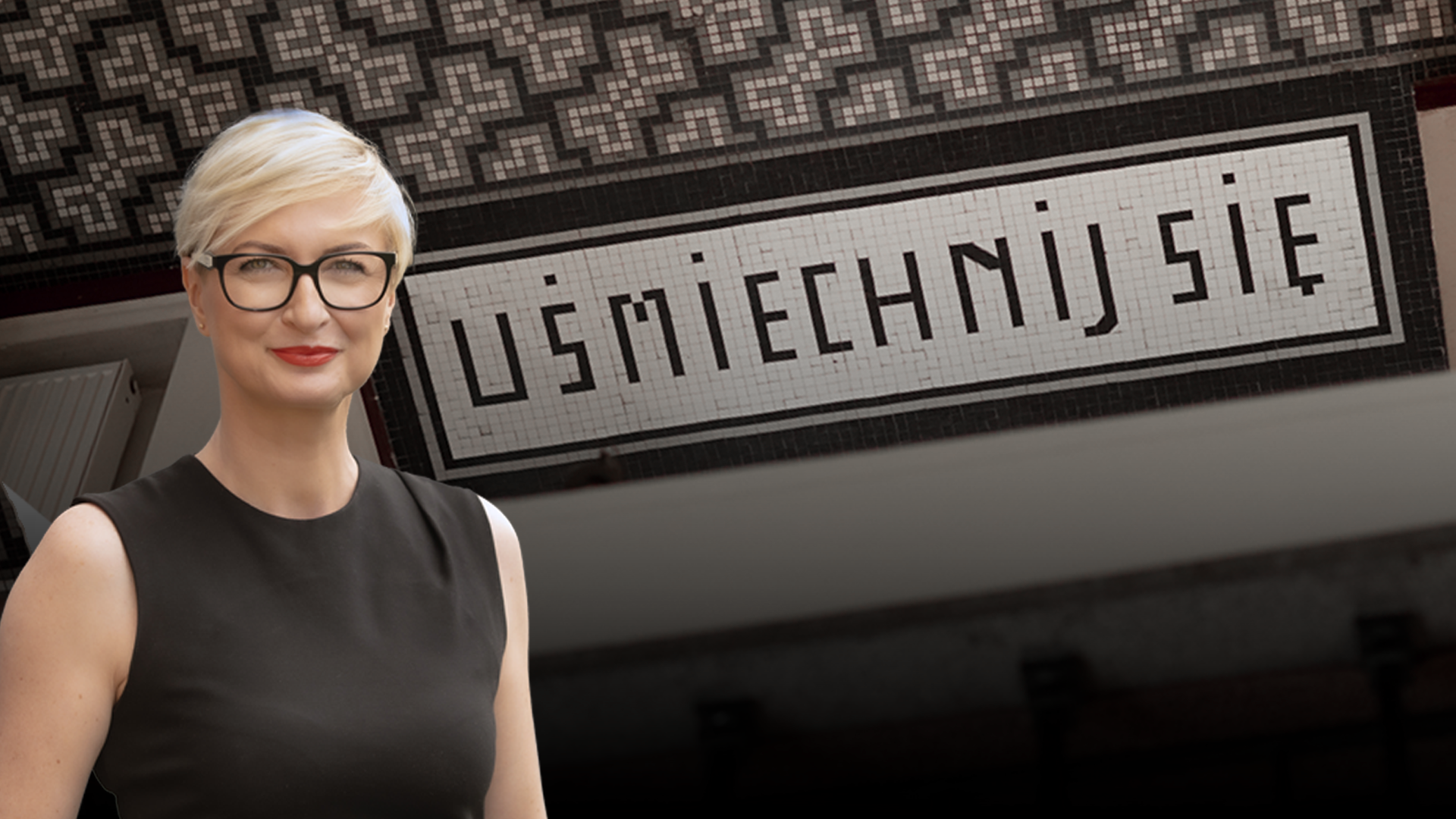
A Smile Communicates Something to Others
A smile is, above all, the first signal that we are experiencing something positive. When I do an exercise involving imagining positive images and ask participants whether they are feeling pleasure, that very first signal is always a smile. But, of course, it is also a signal to other people that we have a positive attitude towards them
– says Prof. Katarzyna de Lazari-Radek, adding:
People who smile are, for example, perceived by a group as more positive, friendly and as individuals from whom we do not expect anything bad. People who are smiling and positively disposed towards others are simply more accepted and better liked. To a large extent, this is exactly what matters to us, as we are social beings for whom social acceptance is very important.
We Can Improve Our Mood... with a Smile
If we smile, meaning that we arrange our facial muscles in a particular way, we simultaneously send a signal to the brain that something good is happening. The brain then activates biochemical processes that support this state. This means that through smiling alone we can influence our emotional state and, for example, improve our mood.
A Smile Is Contagious
We have something called mirror neurons, which can be observed very clearly in children. Why is it that when one child starts crying in a nursery, the others soon begin to cry as well, and vice versa?
– asks Prof. de Lazari-Radek, before answering:
Our emotional states are contagious. In other words, when we observe the reactions of others, we often respond in a similar way. If somebody smiles at us, it is difficult not to smile back.
Does Every Smile Mean Happiness?
No, certainly not, because we are also capable of using a smile to conceal anxiety, stress or even suffering
– the Vice-Rector replies, adding:
I think that in serious situations it is better not to pretend but to communicate clearly that, for example, we need help or support. If we hide difficult emotional states behind a smile, we do not give others the opportunity to support us.
Let’s Not Smile at Any Cost
Forcing a smile is probably not the best solution. I think most of us want to be authentic. Of course, we should work on our state of mind and trying to maintain a positive outlook, because fortunately bad things do not happen to us most of the time.
More Kindness, Less Fear
What wishes can be extended to the University of Lodz community on the occasion of World Smile Day? Prof. Katarzyna de Lazari-Radek points not only to the smile itself.
May we be kind to one another and remember that kindness is something we can cultivate within ourselves. None of us remains exactly the same throughout our lives, and kindness and a positive attitude towards one another build a stronger community. Because where there is kindness, there is less fear, and where there is less fear, there is also more space for growth and development
– the philosopher and ethicist concludes.


