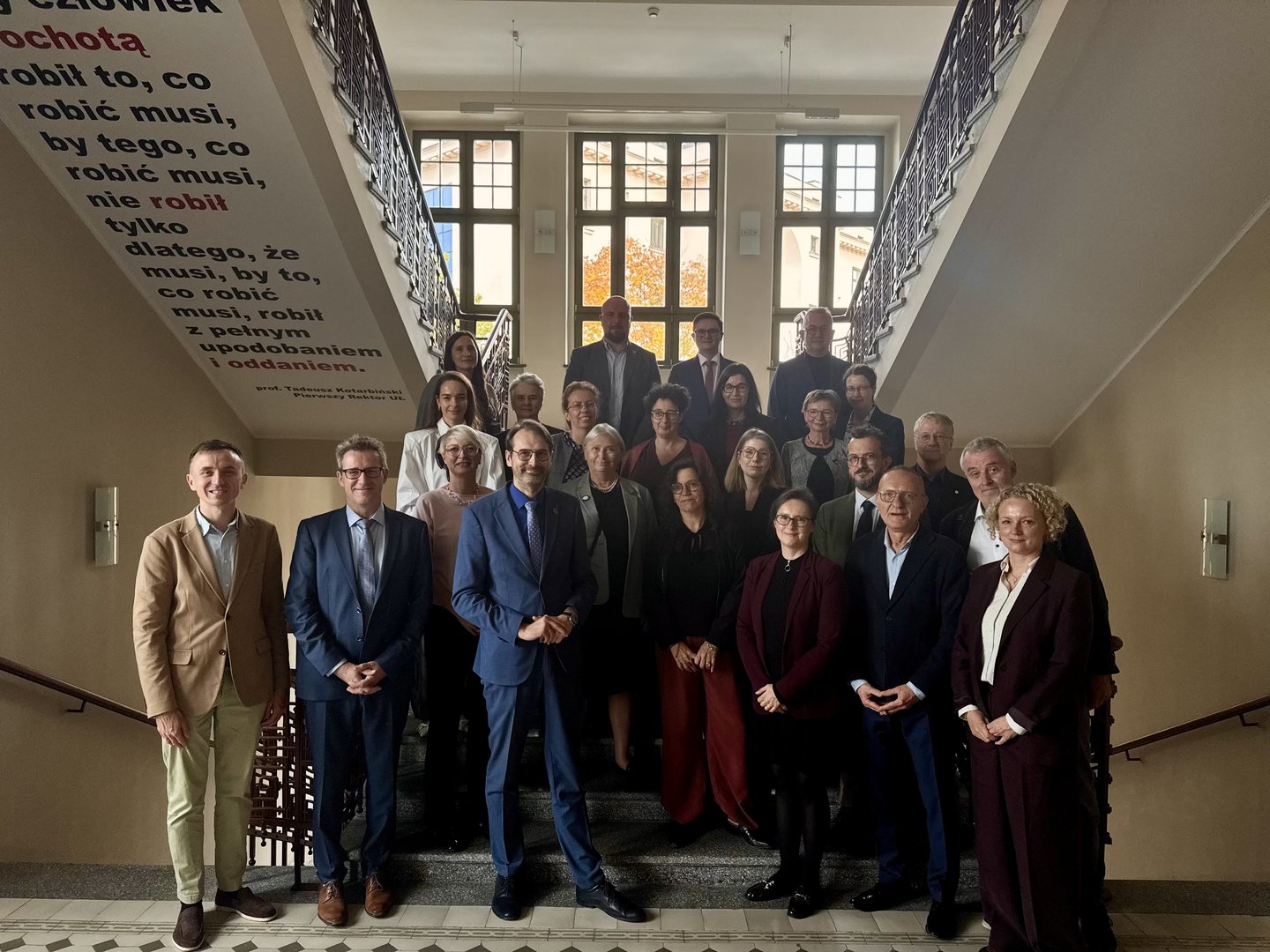
During a series of meetings, representatives of the expert panel held discussions with the authorities of the University of Lodz and a team of experts from four faculties of the university involved in preparing the project. The discussions focused, among other things, on the university’s experience in German and European studies, cooperation with German universities, academic mobility, the quality of education, plans for the development of interdisciplinary study programmes and research dedicated to Polish-German relations and European integration, as well as the Centre's long-term plans for development.
The discussions also highlighted Łódź’s unique links with Germany. The city’s history is inseparably connected with the contribution made by German residents and entrepreneurs to its economic, social and cultural development. This multicultural heritage, combined with the scientific potential of the University of Lodz and its extensive network of partnerships with German universities, constitutes a strong argument in favour of locating the new DAAD Centre for German and European Studies in Łódź.
The planned Centre for German and European Studies is intended to support the development of interdisciplinary research and education in the humanities and social sciences, while also strengthening academic cooperation between Poland and Germany. Active cooperation with the international network of DAAD centres, the promotion of knowledge about Germany and Europe and the development of mobility programmes for students, doctoral candidates and researchers would also be an important aspect of the centre’s activities. The Justus Liebig University Giessen is the University of Lodz's strategic partner in this initiative.
The University of Lodz's application is in line with the university’s internationalisation strategy and its long-standing commitment to developing academic cooperation with German partners. The establishment of the Centre in Łódź would further strengthen the position of the University of Lodz as one of the leading centres for research and dialogue on contemporary Germany, Europe and Polish-German relations in Central Europe.


