Dr Bartosz Kałużny (Centre for External Relations, University of Lodz): There are already many translations of The Odyssey on the market. What makes people continue to translate classical works anew?
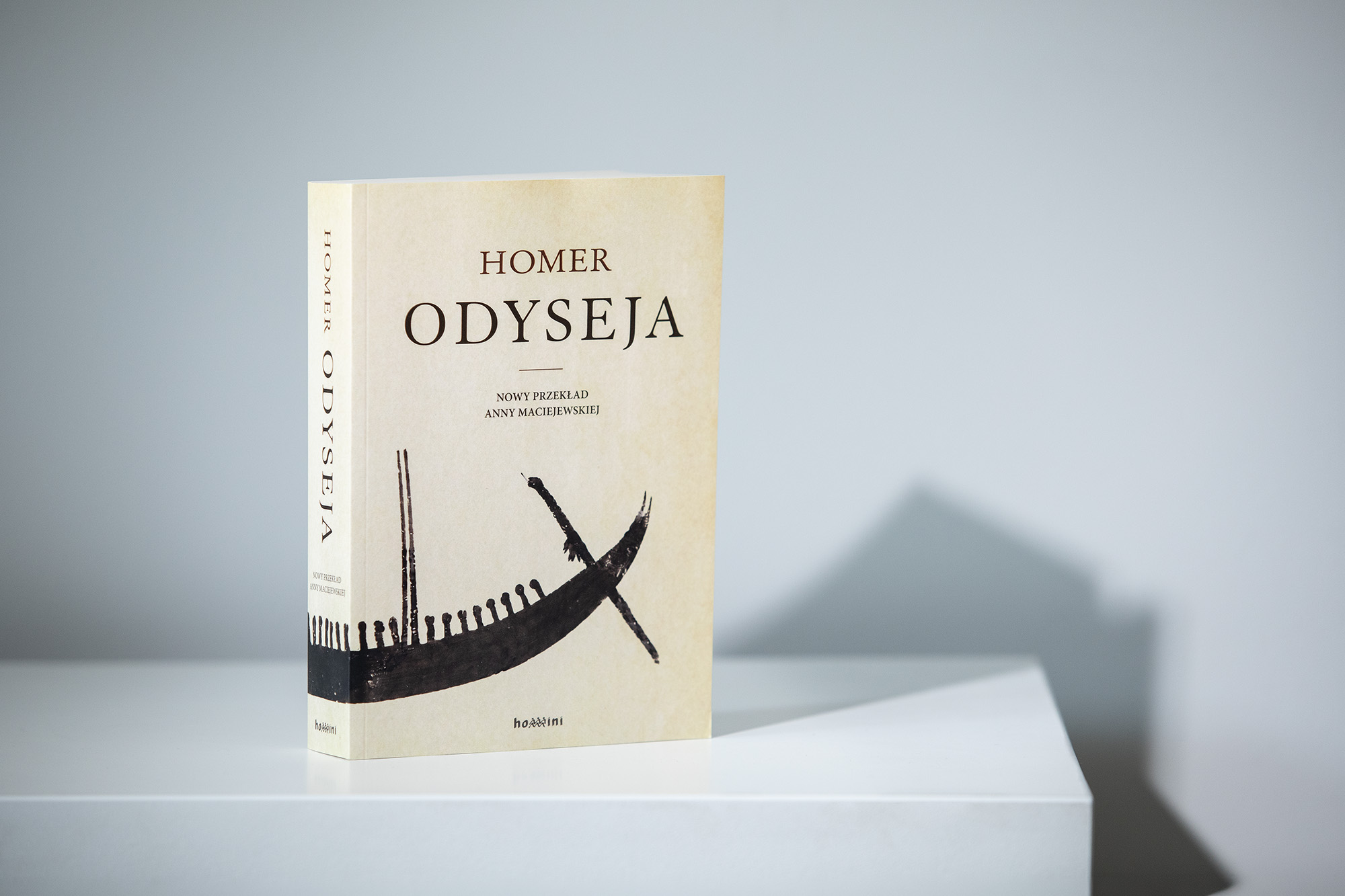
Dr Anna Maciejewska: Above all, it is done to ensure they remain accessible. It is not necessarily about discovering something that previous translators overlooked. Rather, it is about conveying the same work in language that is understandable to contemporary readers.
I am very fond of Parandowski’s translation, but it is now almost a hundred years old. For me, it remains perfectly readable, although somewhat old-fashioned in places. For younger readers, however, the linguistic distance may feel much greater.
Texts by Homer or Shakespeare need to be refreshed from time to time precisely so that they can continue to reach new audiences.
BK: You did not begin working on your translation with the intention of publishing a book, did you?
AM: No. It began primarily as an inner need. I wanted to find out whether I was capable of rendering this text into Polish. I started translating and discovered that it was working. Then I thought: why not try the whole thing? My text was completed in 2015.
I worked on it without a commission from a publisher and without any publication plans. In fact, I assumed the manuscript might simply remain in a drawer. It was a project born of fascination with the text rather than market research.
BK: What was the greatest challenge in the translation process: emotions, cultural realities or the characters’ way of thinking?
AM: Not the characters’ emotions. The Odyssey is a timeless work precisely because those emotions remain remarkably close to our own. Greater challenges arise from the realities of a world that no longer exists.
One constantly has to decide whether to retain a Greek term and explain it in a footnote, or replace it with a modern equivalent that may be less precise.
Take the word megaron, for example, which refers to the principal hall of a house. Should one preserve the original term or simply write “hall”? Names connected with clothing, food or weaponry are often even more difficult to translate.
At the same time, one must remember that this is poetry. Any word chosen must not only convey meaning but also fit the rhythm of the verse. There are also terms for which no single Polish equivalent exists, meaning they may need to be rendered differently in different contexts.
This is not a technical translation. I have translated many historical sources, so I know how that is done. In literary translation, what matters most is creating in the reader’s mind an image as close as possible to the one I see as the translator. And in the case of poetry, one must additionally draw the reader into the unceasing flow of the verse.
BK: What role does a translator play? To what extent are they an artist and to what extent a craftsperson?
AM: I am a supporter of the view that translation is an art. Not in the romantic sense of inspiration granted only to a chosen few, but as an art that combines skill with decisions that sometimes resist rational explanation.
The minimum requirement of a translator’s craft, regardless of the text, is to interfere with the original image as little as possible, while ensuring that the text sounds natural in the target language.
For instance, Polish syntax is in many respects very similar to that of Ancient Greek. At the same time, Ancient Greek is full of participles, so we encounter formulations such as “someone doing something, which was such-and-such, having taken something appearing in a certain way and, while going somewhere, having met a man who was a friend, said to him...” and so on. One has to render this into Polish in a way that is digestible, not merely grammatically correct.
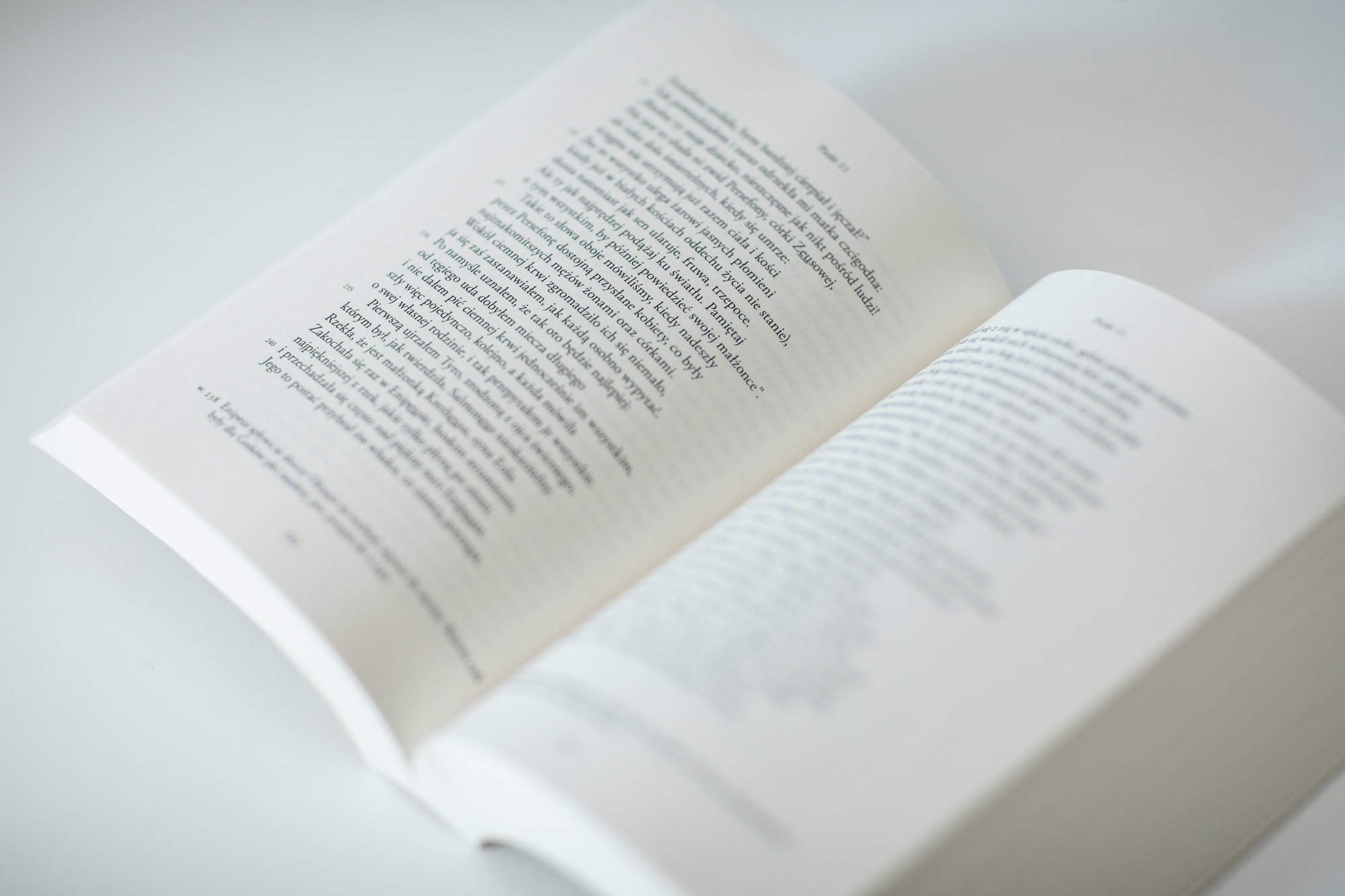
In literary translation, one must also balance fidelity to meaning with artistic qualities. To what extent should artistic considerations be allowed to distort precision? Sometimes the sound of the verse requires changes in syntax. Sometimes something needs to be added; at other times, something must be omitted. Decisions like these are made virtually line by line.
The similarity between Greek and Polish syntax, however, allowed me to preserve the original number of lines, usually without major adjustments in content. In this respect, I managed to fulfil Julian Tuwim’s requirement that a translation should occupy the same amount of textual space as the original.
BK: Which motif in The Odyssey do you consider the most relevant today?
AM: For me, the most important theme is the return home. It forms the axis of the entire story.
Odysseus strives to get home throughout the poem. All the adventures, monsters, sorceresses and storms are fascinating, but they remain incidents along the way. It is a fairy tale of sorts, a collection of seafaring stories, entertainment of the highest quality for its original audience. Yet the central thought in Odysseus’ mind never changes: “I want to go home.” He never loses sight of that goal.
I think that is exactly why the motif remains universal. Some people are carried far away from where they come from. Sometimes they choose that path themselves. However, home remains something of one’s own, something worth returning to.
BK: Can a contemporary reader actually like Odysseus?
AM: He is a complicated character. Personally, I am not particularly fond of people who scheme and manipulate, and Odysseus does so constantly. If he does not have to tell the truth, he usually will not.
On the other hand, he tries to take responsibility for his men. He does everything he can to survive and, if possible, to ensure that his crew survives as well. He possesses very human qualities. I think there are moments when readers will like him and moments when they will be angry with him.
BK: And what about Penelope? Is she merely a symbol of the faithful wife waiting for her husband?
AM: Given the realities of her world, she does a remarkable amount. She plots, postpones the decision to remarry and makes use of various stratagems. She is a far more active character than she is often assumed to be.
The relationship between Penelope and Telemachus is also portrayed in a very interesting way. Each misinterprets the other’s intentions. Telemachus is convinced that his mother wants to remarry, even though the facts suggest otherwise. Penelope, meanwhile, believes that her son wants to drive her from the household. They are unable to communicate. It is a surprisingly perceptive psychological observation.
BK: Does a contemporary reader need to be an expert in mythology and the ancient world to read Homer?
AM: This is a question that always comes up during editorial discussions, and I imagine screenwriters and directors ask themselves the same thing. What remains clear to readers and audiences, and what does not?
The answer is no, one does not need to be a specialist. It helps, however, to know a few basic things: that gods such as Athena and Poseidon exist and have specific powers, that there was a Trojan War, and that slavery existed. That is enough. There is no need to know all the hundreds of names that appear in the text. That is a task for scholars. Readers should simply follow the story.
BK: Can The Odyssey be treated as a source of information about antiquity?
AM: In a certain sense, yes. After all, it was created within a specific historical context. However, the extent to which it accurately depicts the realities of its age or provides reliable information about the Trojan War and its aftermath, remains the subject of serious research by philologists, archaeologists and cultural historians.
Did there ever exist a reality in which all the non-fantastical elements of Homer’s world coexisted simultaneously? Probably not. I approached The Odyssey primarily as a literary work.
BK: What has modern scholarship changed in our understanding of Homer? Do archaeology, linguistics, new technologies and digital methods of textual analysis allow us to read The Odyssey differently today?
AM: Diverse interpretations and scholarly investigations of The Odyssey began as early as the Hellenistic period. Modern professional philological research has been ongoing since the time of Friedrich August Wolf, while Heinrich Schliemann’s activities, however amateurish they often were, helped connect literary research with archaeology. Since then, we have undoubtedly learned a great deal.
The bibliography on the subject is now so vast that no individual scholar, or even a single research team, can fully grasp the entire intellectual legacy.
New research methods also bring increased specialisation. One scholar studies weaponry, while another analyses architecture. Such fragmentation is one of the broader challenges of contemporary scholarship.
In an ideal world, a translator would familiarise themselves with every research finding and every possible interpretation of every word. They would probably produce a better translation. But acquiring that knowledge alone would take decades. Meanwhile, even more literature would appear. A single lifetime would not be enough, especially when one must still take the requirements of poetic translation into account.
Of course, even a relatively superficial knowledge possessed by a translator today is richer than that available to Lucjan Siemieński a century and a half ago. Yet for readers, the image conveyed by translations changes only very slowly. What changes more noticeably is the manner of its presentation.
BK: How would you persuade someone who has never read The Odyssey to pick it up?
AM: I would simply say: “Because it is interesting.” This is not a book only for specialists. Nearly three thousand years ago, people told these stories because they were fascinating. And they still are.
BK: Finally, do film adaptations help the classics?
AM: I think they do. Of course, there will always be people who want a film adaptation to remain one hundred per cent faithful to the book. There will always be viewers who point out, for example, that Legolas could not possibly have been blond in Tolkien’s original work.
However, if a film is made well, it can encourage people to reach for the original. One must simply remember that every adaptation is an interpretation. It is not Homer’s Odyssey, but a particular director’s vision of it.
In films, Odysseus’ travels are often presented as memories of events that genuinely occurred. In The Odyssey, most of them are told by Odysseus himself. And Odysseus lies whenever he can. He is a sailor, after all. Divide his stories by twenty and perhaps we might discover what really happened to him.
What cinema can never fully reproduce is the poem’s form. The Odyssey was above all a work performed aloud. It consists of twenty-four songs, not twenty-four chapters. Ancient Greek possessed rhythm, created by patterns of long and short syllables, melody, created by patterns of pitch accent, and a musicality that cannot be completely transferred either to the screen or even to the written page.
In languages that lack pitch accent and distinctions in syllable length, such as modern Polish, Italian or Modern Greek, one can reproduce only part of the original rhythm through word stress. That is what we translators of literature attempt to do. In film, however, it is virtually impossible to have characters speak to one another in rhythmic verse.
That said, if I wanted to encourage someone unfamiliar with long-form reading to encounter The Odyssey for the first time, beginning with the film would not be a bad idea.
BK: A final message for our readers?
AM: Read The Odyssey. Or rather: read in general. Stories are fascinating. They offer a completely different kind of experience from the short pieces of content that we scroll through every day.
***
photos: Bartosz Kałużny
***
If you are interested in translation studies and the role of the translator, we encourage you to watch the recording of the event Jarniewicz i Świerkocki pytają… [Jarniewicz and Świerkocki Ask…], featuring Elżbieta Tabakowska.


