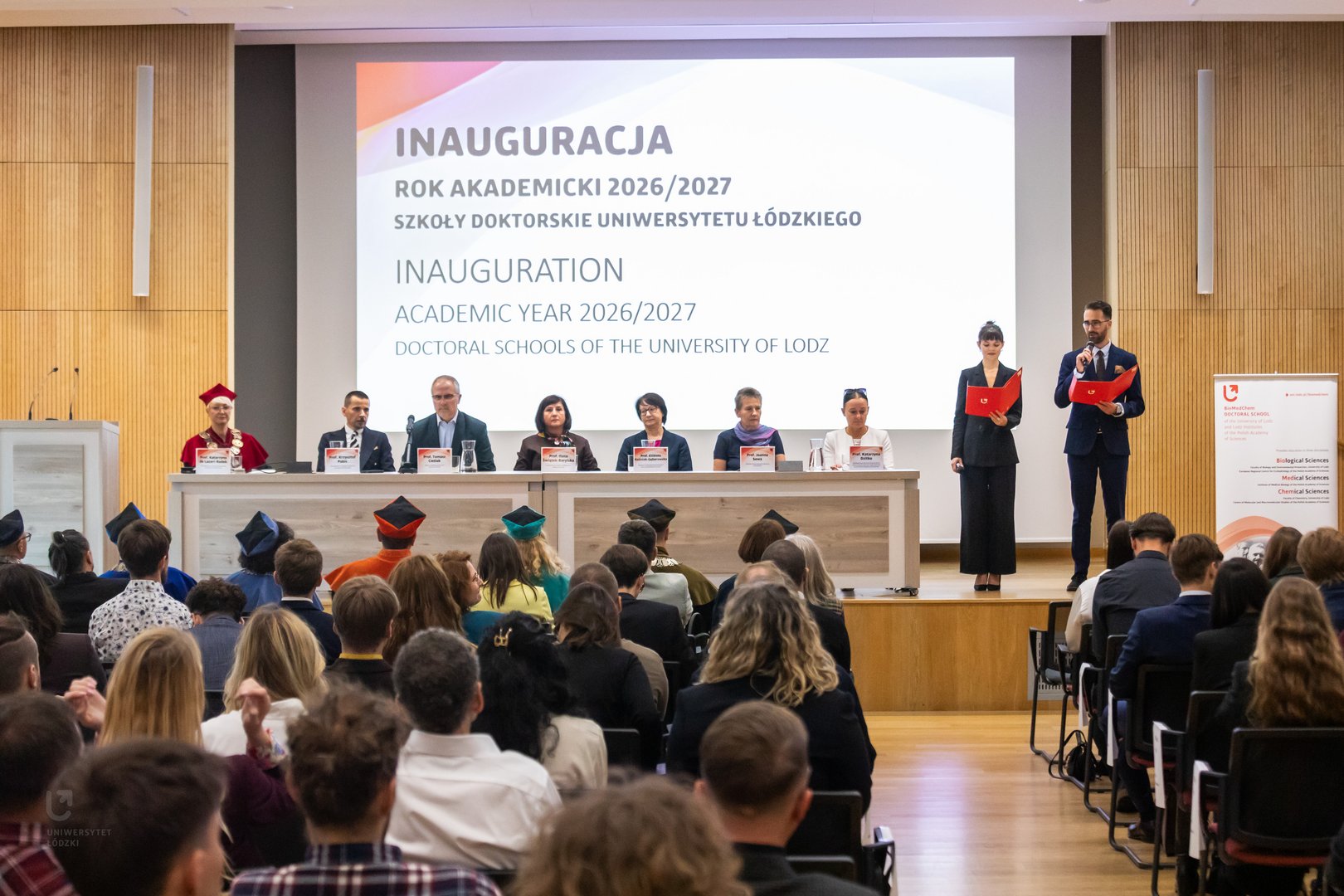

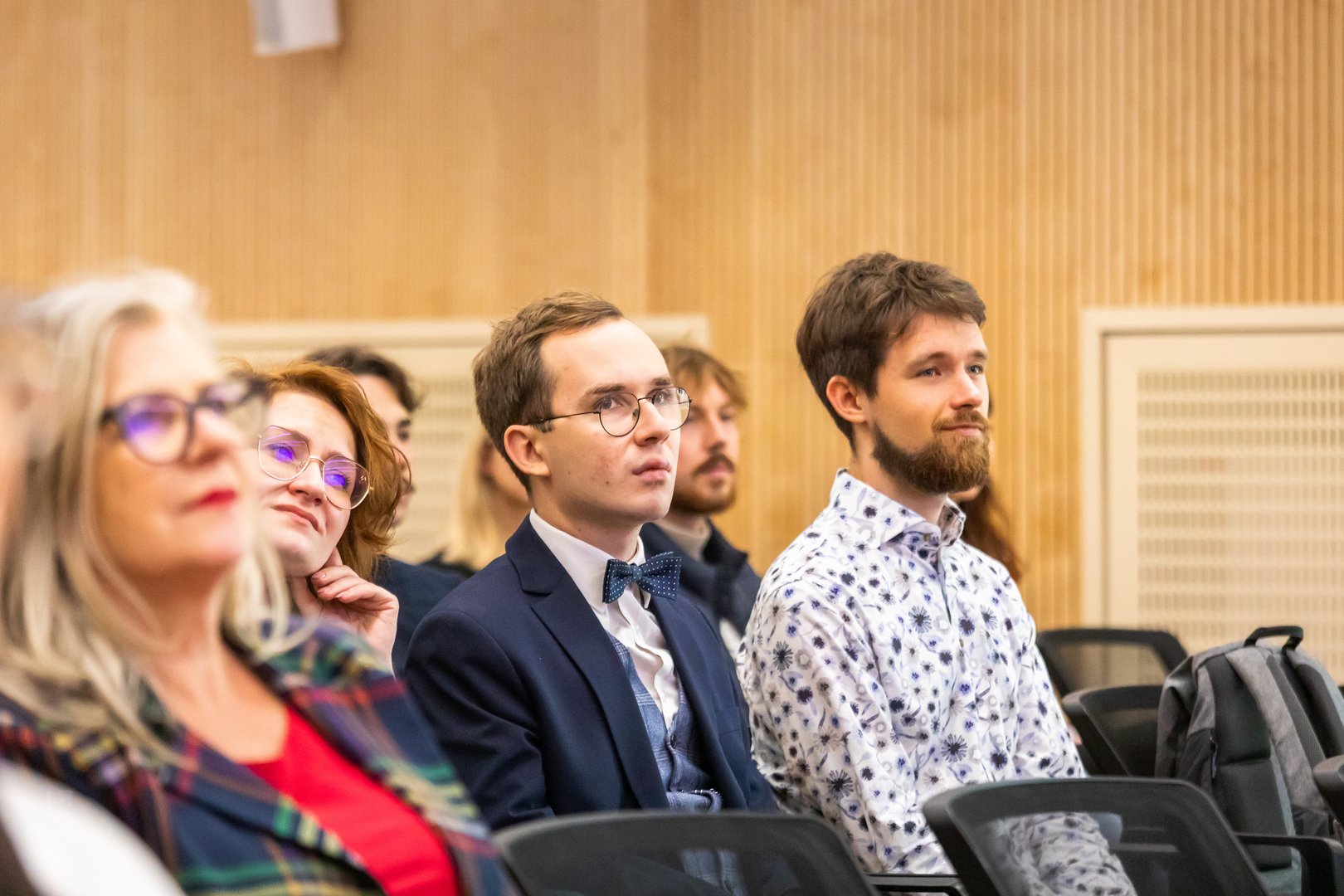
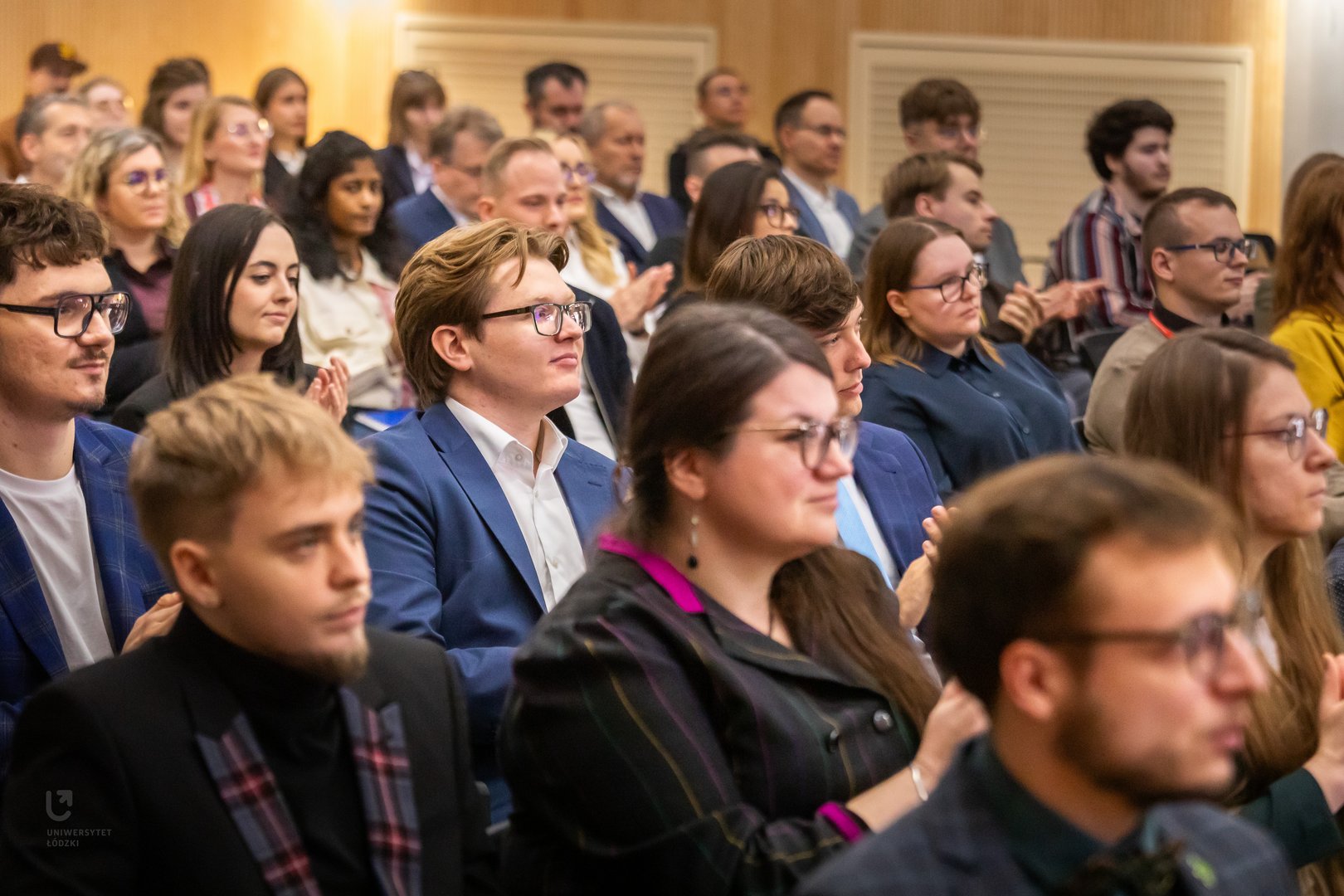
Currently, there are 420 doctoral candidates within the doctoral schools of the University of Lodz, including 51 international doctoral candidates. The international dimension of doctoral education remains one of the areas consistently developed by the university. During the inauguration, particular emphasis was placed on internationalisation, scientific research and the role of doctoral schools in preparing the next generation of researchers.
In the academic year 2026/2027, a total of 114 new doctoral candidates were admitted to the doctoral schools. The largest number, 37 candidates, joined the Doctoral School of Exact and Natural Sciences. A further 34 candidates commenced their education at the Doctoral School of Social Sciences, 28 at the BioMedChem Doctoral School of the University of Lodz and the Institutes of the Polish Academy of Sciences in Lodz, and 21 at the Doctoral School of Humanities.
Among the newly admitted doctoral candidates there were 13 international students representing various countries and regions of the world, including Sri Lanka, Germany, Nigeria, the Netherlands, India, Lithuania, Pakistan, Ukraine, Malta, Kenya and Costa Rica. This international cohort confirms the growing attractiveness of the University of Lodz as a place to conduct research and pursue doctoral education.
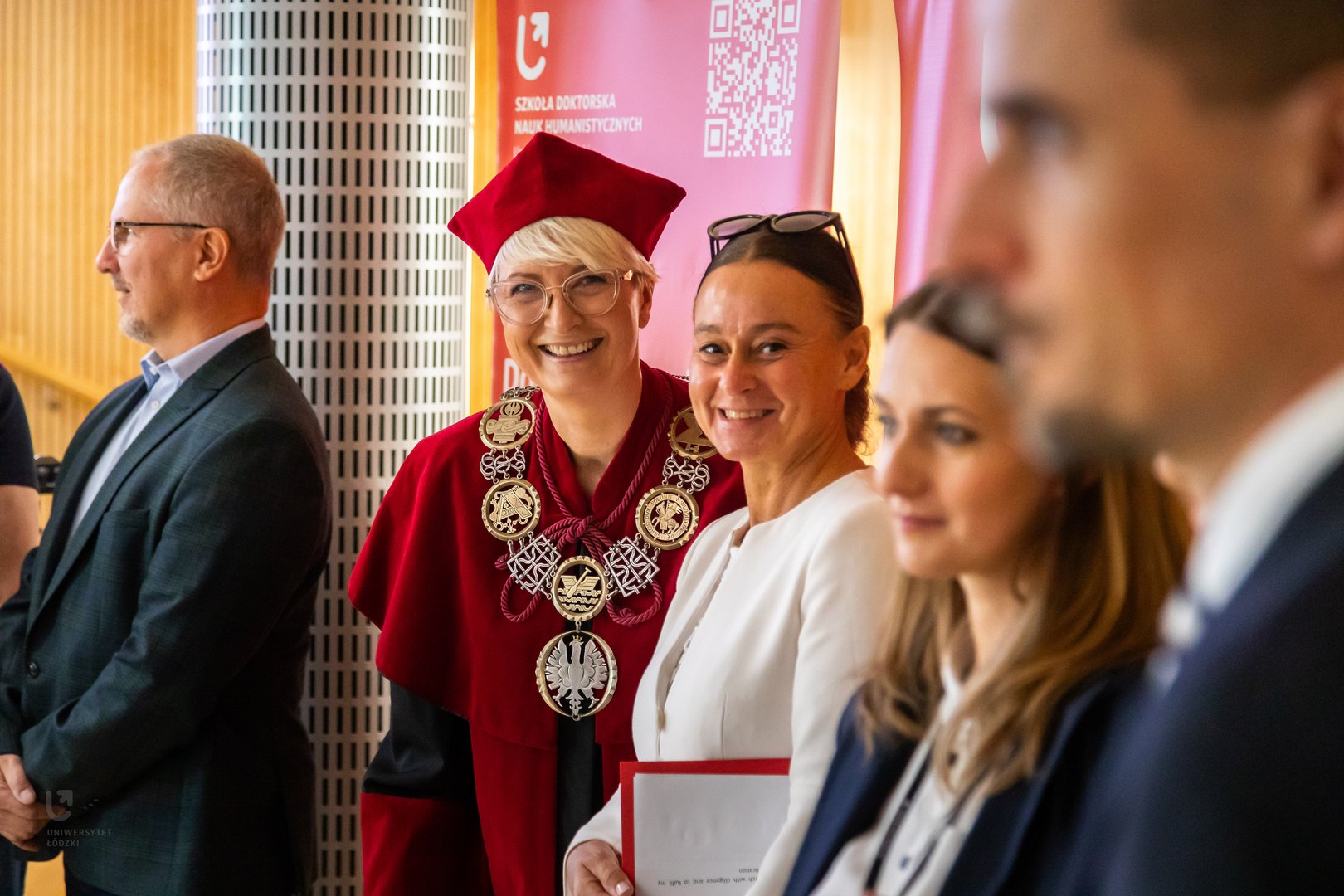
The presentation of distinctions to candidates who achieved the highest results in the admissions process to the doctoral schools of the University of Lodz was one of the most important moments of the inauguration ceremony. The distinctions were presented by the Vice-Rector for the Internationalisation of Science and Education, Prof. Katarzyna de Lazari-Radek, together with the directors of the doctoral schools.
The following candidates were honoured:
- Joanna Kosińska-Wajcht from the Doctoral School of Humanities (discipline: Cultural and Religious Studies);
- Kamil Słomczyński from the Doctoral School of Exact and Natural Sciences (discipline: Biological Sciences);
- Aleksandra Marczak from the Doctoral School of Social Sciences (discipline: Psychology);
- Miłosz Michałowski from the Doctoral School of Social Sciences (discipline: Management and Quality Sciences), who achieved the same admissions score as Aleksandra Marczak;
- Marta Krzyżaniak from the BioMedChem Doctoral School of the University of Lodz and the Institutes of the Polish Academy of Sciences in Lodz (discipline: Biological Sciences).
During the ceremony, first-year doctoral students took their doctoral oath, while representatives of each doctoral school presented their research projects and academic interests. The programme also featured the inaugural lecture delivered by Prof. Krzysztof Pabis entitled “Dusza motyla: jak połączyć teorię chaosu z sądem ostatecznym, obiadami czwartkowymi i literaturą Vladimira Nabokova” [The Soul of a Butterfly: How to Connect Chaos Theory with the Last Judgement, Thursday Dinners and the Literature of Vladimir Nabokov].
The academic year 2026/2027 of the doctoral schools of the University of Lodz was officially declared open by Prof. Katarzyna de Lazari-Radek following the joint performance of the academic anthem Gaudeamus igitur.
Congratulations to our new doctoral students and best wishes to the entire community for a successful academic year!


