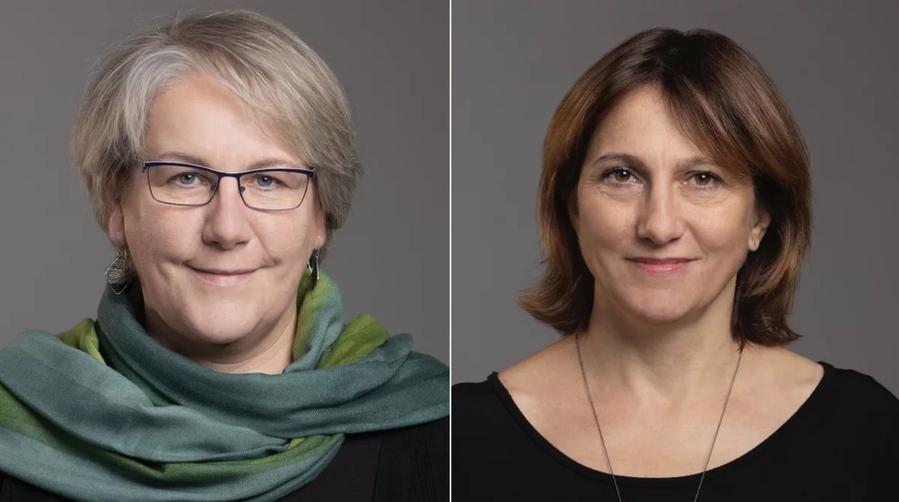
 Dr hab. Aleksandra Nowakowska (Associate Professor) and Dr Agnieszka Rzeńca from the Department of Regional Economics and Environment at the University of Lodz.
The nominations to the composition of the Committee for Spatial Economy and Regional Planning of the Polish Academy of Sciences are an expression of recognition of the scientific and expert achievements of both ladies, which include issues such as place-based policy, integrated planning, just transition, environmental protection and adaptation to climate change.
Committee for Spatial Economy and Regional Planning of the Polish Academy of Sciences (KPZK PAN) is one of the problem committees operating at the Presidium of the Polish Academy of Sciences. Its tasks include conducting scientific-research and consultative activities pertaining to the regional policy and the policy of spatial development of the country. In addition, its role is to integrate the scientific community with representatives of the public and private sectors, as well as to disseminate and introduce the results of scientific research in the field of spatial management into economic and social practices.
Source: Dr Agnieszka Rzeńca
Edit: Dr Jakub Zasina, photos: Bartosz Kałużny, Communications and PR Centre, University of Lodz


