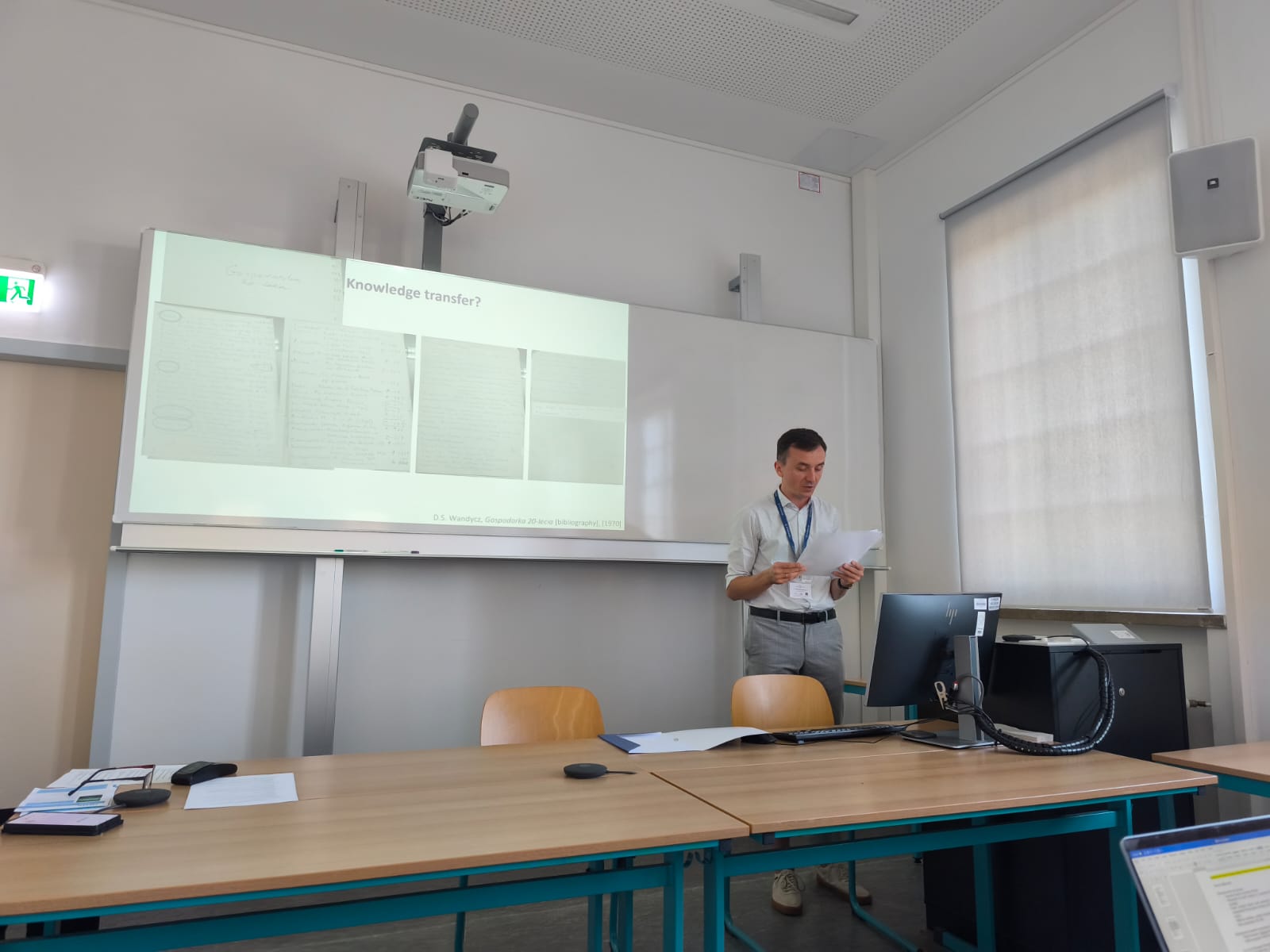
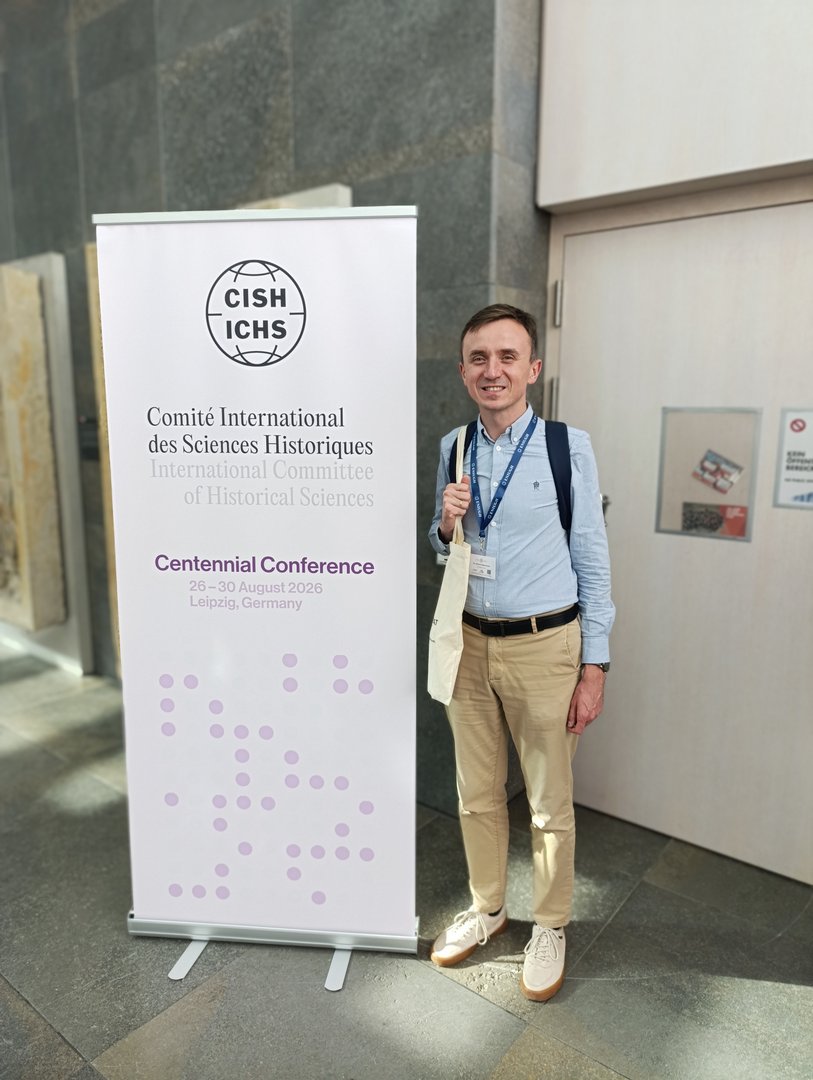
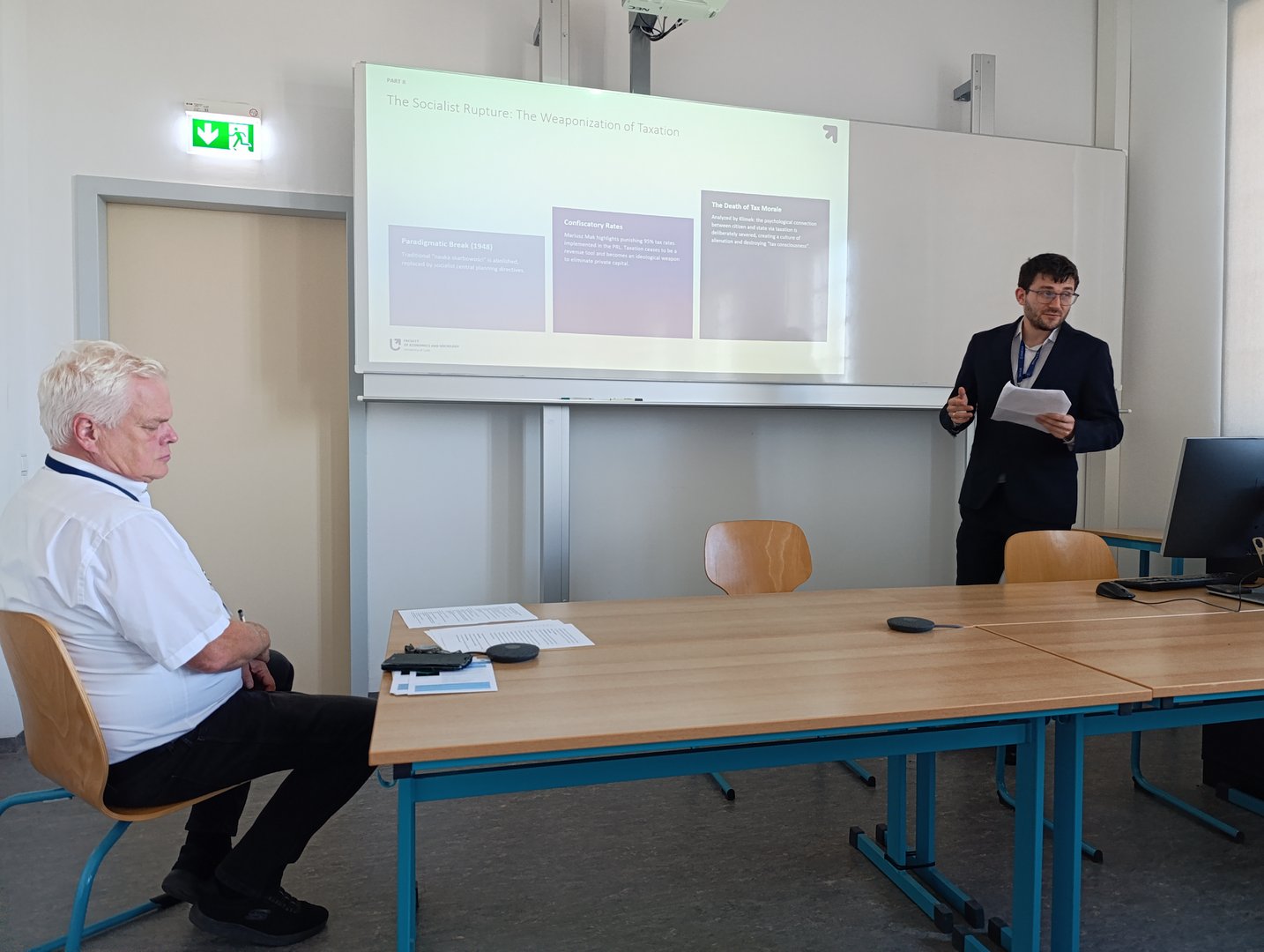
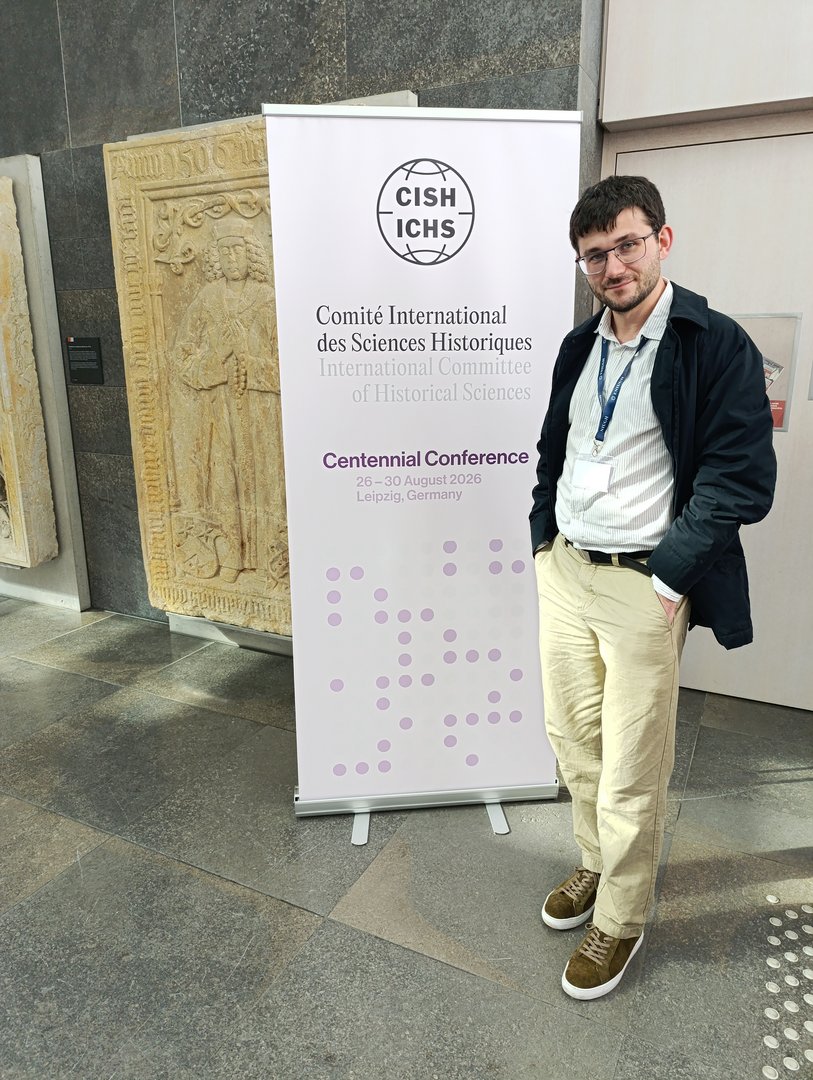
The researchers delivered papers during a session of the Polish Association of Economic History (PTHG), co-organised by Dr Bębnowski. It was the largest panel of the congress, bringing together researchers from France, Germany, Poland and Hungary. Scholars from India, Japan, Germany, Poland and Romania attended the presentations, which focused on selected aspects of the development of Polish economic historiography over the long term.
Title of Dr Damian Bębnowski’s paper: Behind the Iron Curtain: Exiled Polish Economic Historiography, 1945-1989.
Title of Dr Adam Kędrzyński’s paper: Fiscal Issues In Polish Research Over The Last Hundred Years.
CISH was founded in Geneva in 1926. For one hundred years, it has supported the development of historical sciences rooted in the humanities and social sciences, while also fostering international research cooperation and exchange between different historiographical traditions. Creating a forum for debate on transformations within history as an academic discipline, new research directions and the social role of historical knowledge is one of the organisation’s most important areas of activity. International congresses of historical sciences play a particularly important role in this respect, bringing together researchers representing different historical periods, regions of the world and methodological approaches. In 1933, the CISH congress was hosted in Warsaw and Kraków, while in 2022 it was held in Poznań. CISH is a global scholarly organisation bringing together more than 50 national committees and almost 30 international organisations. During the congress in Leipzig, panellists from around the world discussed transformations in the historical sciences, their contemporary diversity and future directions of development across more than 60 sessions and special events.
The aforementioned panel was organised by the Polish Association of Economic History (PTHG), an association bringing together economic historians. The organisation works to advance and promote knowledge of economic history. Since 2021, it has been a member of the International Economic History Association (IEHA), which is responsible for the cyclical World Economic History Congresses (WEHC).


