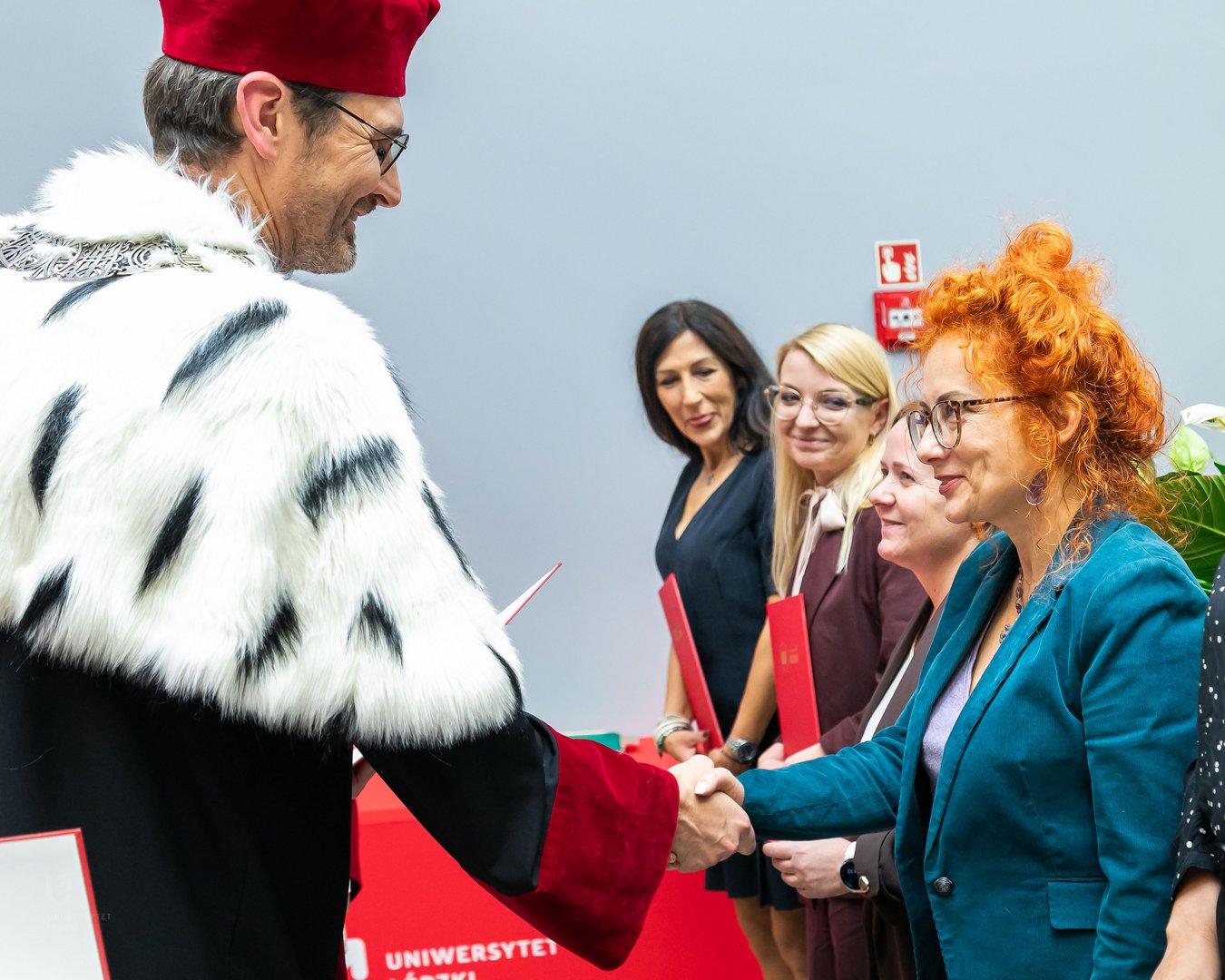
The ceremony began with the entrance of the rectoral procession in ceremonial robes, the presentation of the University banner and the performance of the national anthem by the University of Lodz Choir. Additionally, letters of congratulations from the authorities of the City of Lodz and the Łódź Voivodeship were read out.
We, as the Rector’s Board, are fully aware of how important education is at every level of learning. Good teaching leads to reliable science. Good education simply means well-educated people, including researchers. We are therefore restoring teaching to its rightful place after it was pushed into the background by the so-called Gowin reform.
We have introduced separate Rector’s Awards for teaching achievements, we have numerous projects supporting educators and we have just completed the first Teaching Week, during which we met and discussed the most important challenges in this area. We learned how to teach and, one might say, taught one another modern approaches to education
– said Prof. Rafał Matera, Rector of the University of Lodz, in his opening address to the formal Senate meeting.
According to the Rector, generative artificial intelligence, which offers shortcuts that are not and should never be acceptable in academia, is one of the greatest challenges in both teaching and research.
However, AI can certainly be used wisely and usefully as a tool. Everything depends on us as teachers, on how we explain it to our students and what kind of relationships we build with them. Ultimately, we ourselves need to learn from Generations Z and Alpha. These are different generations, with different opportunities, but exactly the same needs as all previous generations: to achieve something valuable, to pursue truth and to feel secure. Let us not forget this and let us not judge them superficially or through stereotypes
– the Rector warned.
Prof. Rafał Matera also spoke critically about the so-called “predatory” journals, which cost Polish universities hundreds of millions of zlotys, linking the phenomenon to pressure generated by the Polish research evaluation system, which has led to numerous distortions.
However, I would like to emphasise that far more good than bad is happening in research at our university. We have outstanding researchers, the overwhelming majority of our research is honest and reliable, we publish high-quality papers in good and very good reputable journals, we obtain a record number of projects and we are conducting two European Research Council grants. Now we must fight to ensure that all this work has greater meaning for us all and is not focused solely on points – said the Rector. – We are already introducing changes aimed at genuinely raising the scientific standards of the University of Lodz rather than merely creating the appearance of doing so. This is why we have developed the new periodic evaluation system for 2027–2030. I signed the relevant Regulation on 2 October following positive opinions from the University Students' Government Council, trade unions and the Senate. Thank you for that. In the coming months, we will explain the principles of the evaluation system, but I can already say that it will be fair both to those who simply conduct good research and to those returning, for example, from maternity, paternity or parental leave. At the same time, we have introduced a transparent system of rewards for scientific publications. We will also strive for a more friendly and effective incentive system, while continuing our efforts to improve our workplace culture. Our work, your work, deserves the highest level of comfort, because we often spend more time at the University than we do in our own homes.
Speaking about this year’s finances of the University of Lodz and higher education institutions more broadly, the Rector stated that the current funding system was designed primarily to keep universities operating, ensuring decent survival but providing little opportunity for noticeable development. He added that the system even rewarded those institutions that chose to scale down their operations rather than invest and grow, for example by reducing staff numbers or closing entire degree programmes.
We continue to call for 3% of GDP to be allocated to science. At present, it is only 1%... Although science, and higher education more broadly, is not among the current priorities of those in government, the University of Lodz is and will remain in a financial position over the coming years that does not require any radical measures. We achieve this by identifying and implementing reasonable savings without drastic cuts that would negatively affect the financial well-being of employees. We also support faculties that are carrying out necessary, though not always easy, reforms and are consistently seeking to optimise expenditure
– the Rector assured.
He also assessed positively the high level of internationalisation at the University of Lodz, which has not been disrupted by the war beyond Poland’s eastern border or by the stricter visa policy introduced by the Polish state. The Rector additionally highlighted the importance of the university’s participation in the UNIC Alliance, cooperation with long-standing international partners (including one of its oldest partners, the Justus Liebig University Giessen), and the actively developing area of science communication at the University of Lodz.
Ladies and Gentlemen, on the occasion of National Education Day, I would like to thank the entire academic community of the University of Lodz for your everyday work and for continuing one of the noblest missions: acquiring and sharing knowledge, skills and, more broadly, Socratic wisdom. Without your dedication, creativity and mutual support, we would not be such a remarkable University. Let us not fear the future either, because we are still able to ask generative artificial intelligence the next difficult questions. Nobody can stop us in this. All the very best!
– Prof. Rafał Matera concluded his speech.
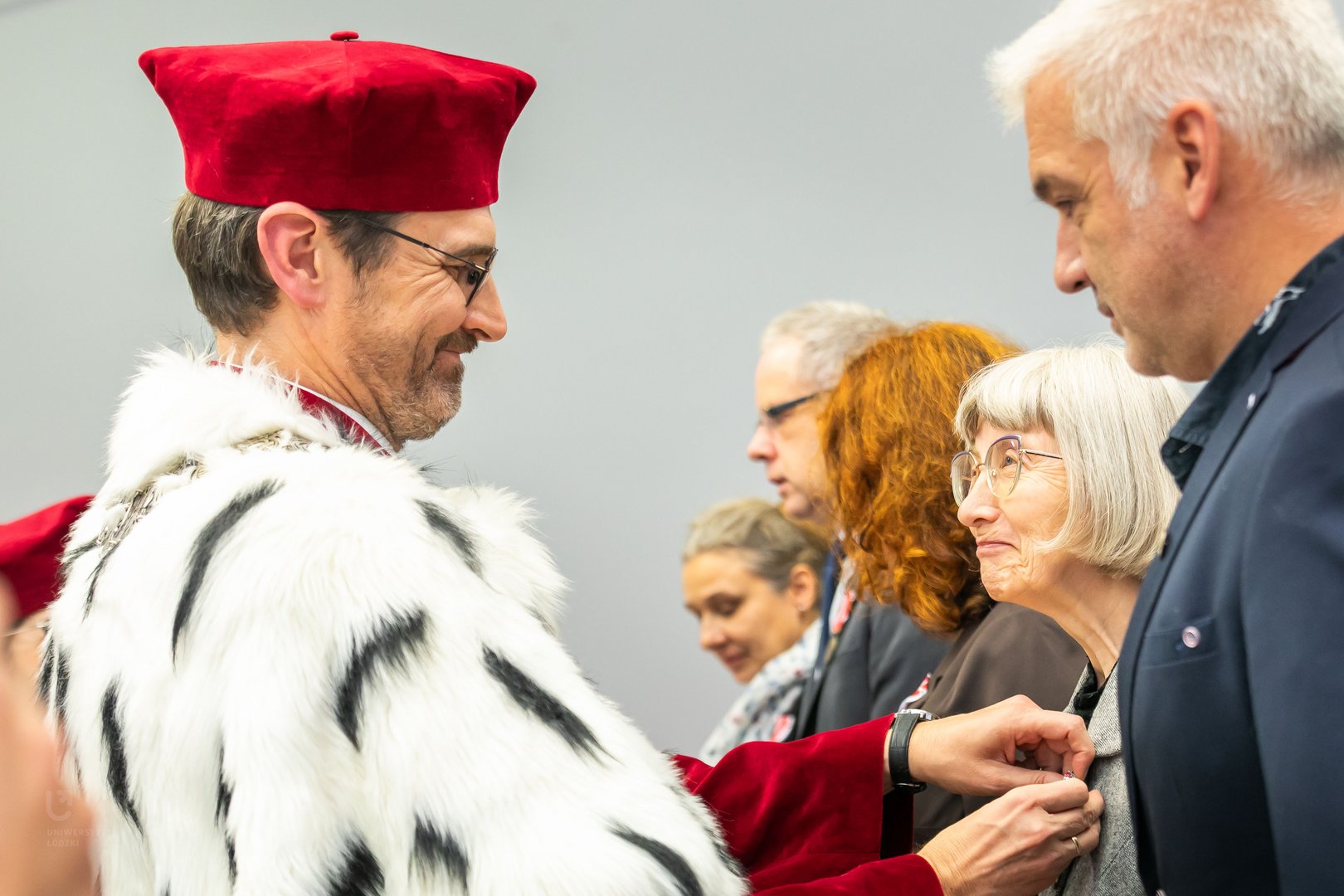
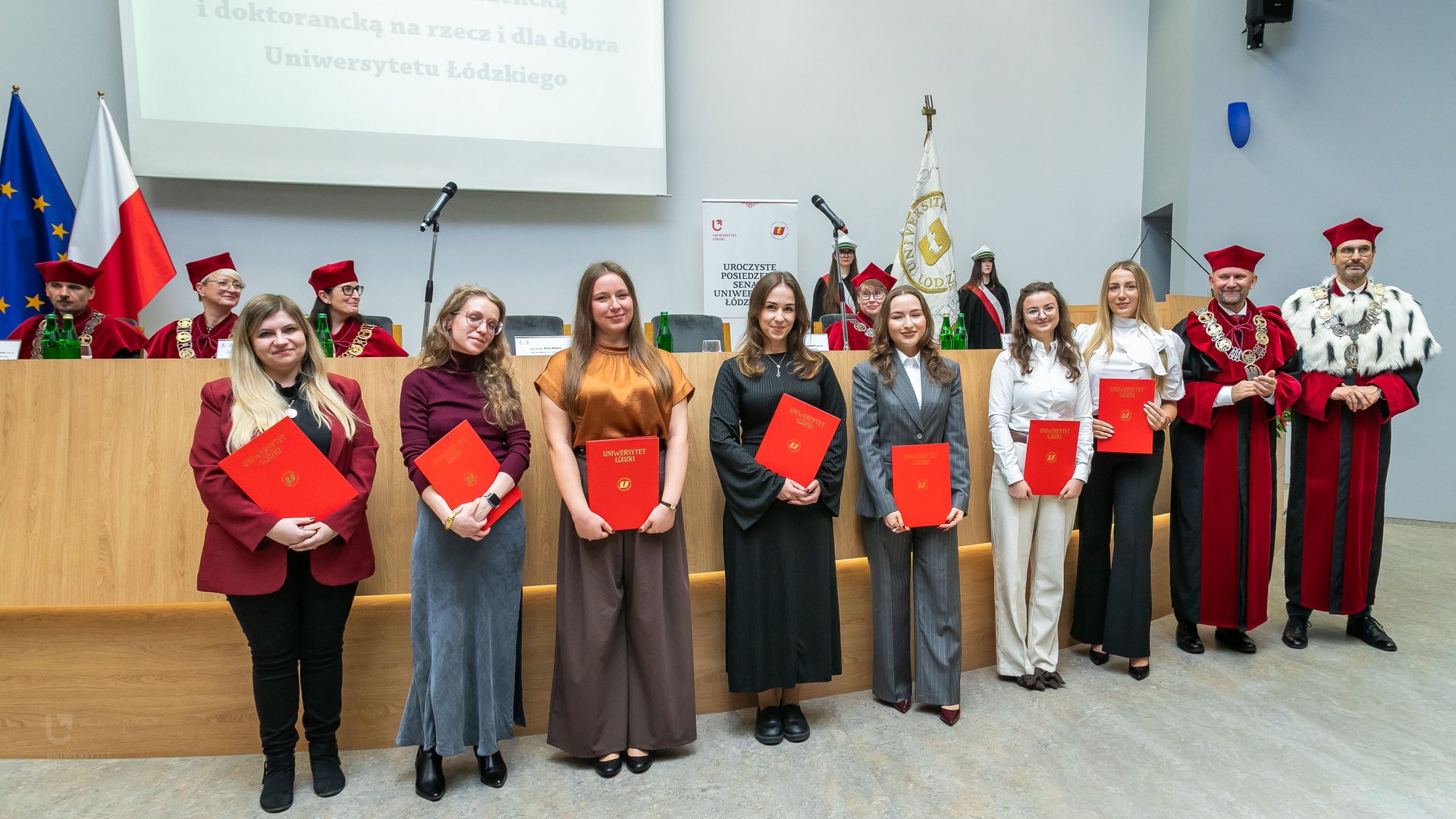
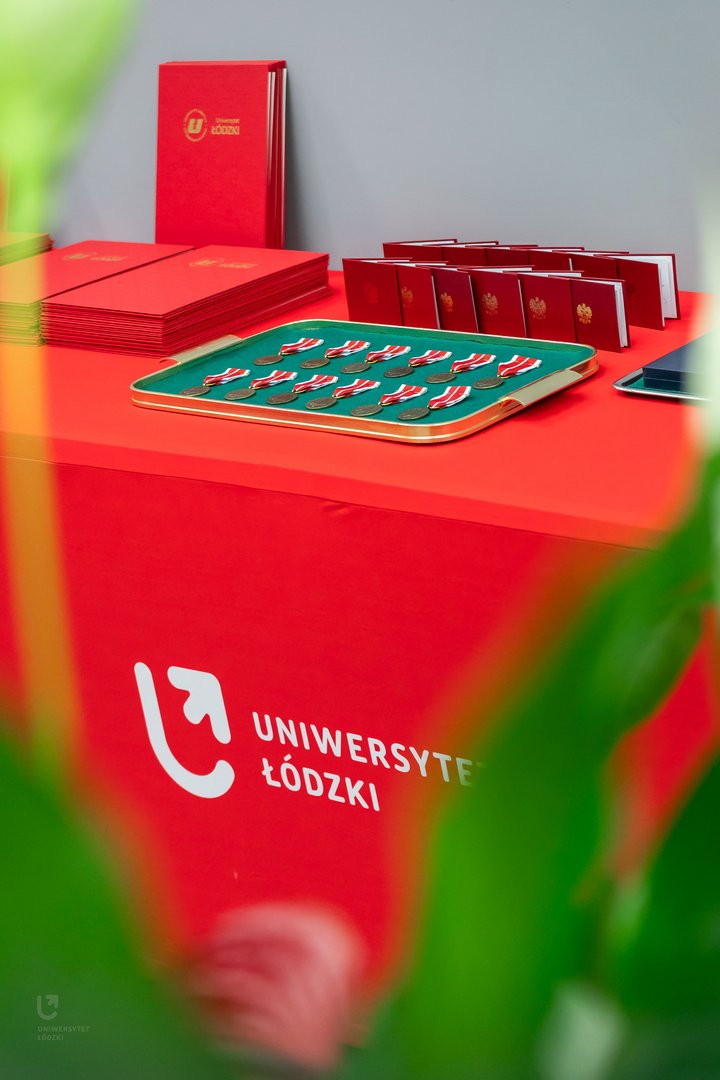
In the second part of the formal meeting of the Senate, the Rector of the University of Lodz, accompanied by members of the Rector’s Board, presented medals, decorations and awards to the University employees, doctoral students and students.
The Bronze Medal Sapientia et Veritas for Meritorious Service to Polish Science, awarded in recognition of distinguished service to higher education and science, including outstanding achievements in research, teaching and organisational activity, was conferred upon Prof. Monika Namysłowska by the Minister of Science and Higher Education.
Recipients of the Medals of the Commission of National Education:
- Dr Maria Adamczewska
- Dr hab. Waldemar Cudny, Associate Professor at the University of Lodz
- Dr Barbara Dzięcioł-Kurczoba
- Dr Anna Gutowska-Ciołek
- Dr Lidia Ignaczak
- Dr Marcin Jaskulski
- Dr Armina Kapusta
- dr hab. Danuta Kowalska, Associate Professor at the University of Lodz
- Dr Łukasz Lechowski
- Dr Marzena Makowska-Iskierka
- mgr inż. Mariola Milewska
- dr hab. Wojciech Tołoczko, Associate Professor at the University of Lodz
Recipients of the Rector’s Awards for Teaching Activity:
- Dr Beata Borowska
- Dr Natalia Cichoń
- dr hab. Magdalena Druszczyńska, Associate Professor at the University of Lodz
- Dr Elżbieta Pędziwiatr-Werbicka
- Dr Natalia Ratajczyk
- dr hab. Sylwia Różalska, Associate Professor at the University of Lodz
- dr hab. Katarzyna Szczepko-Morawiec, Associate Professor at the University of Lodz
- dr hab. Marzena Szwed, Associate Professor at the University of Lodz
- Dr Agnieszka Wolańska-Kamińska
- dr hab. Agnieszka Bukowska-Piestrzyńska, Associate Professor at the University of Lodz
- Dr Agnieszka Janus
- dr hab. Tomasz Miziołek, Associate Professor at the University of Lodz
- dr hab. Urszula Motowidlak, Associate Professor at the University of Lodz
- Dr Agnieszka Murawska
- dr hab. Anna Rogozińska-Pawełczyk, Associate Professor at the University of Lodz
- Dr Agnieszka Rzeńca
- Dr Cezary Szydłowski
- dr inż. Daniel Tokarski
- Dr Marika Ziemba
- Dr Marcin Złoty
- Dr Agata Żółtaszek
- dr hab. Konrad Rudnicki
- dr hab. Małgorzata Karkocha, Associate Professor at the University of Lodz
- Dr Olgierd Ławrynowicz
- Dr Wojciech Rutkowski
- Dr Piotr Smejda
- Dr Jiři Byčkov
- Dr Justyna Groblińska
- Dr Klaudia Jeznach
- Dr Paulina Kaźmierczak
- dr hab. Magdalena Koźluk, Associate Professor at the University of Lodz
- Dr Marek Molenda
- Dr Agnieszka Przybyszewska
- dr hab. Witold Sobczak, Associate Professor at the University of Lodz
- Dr Anna Stępniak
- Dr Weronika Szubko-Sitarek, Associate Professor at the University of Lodz
- Dr Mateusz Szurek
- Dr Aneta Tylak
- Dr Magdalena Wismont
- dr hab. Bartosz Bartosiewicz, Associate Professor at the University of Lodz
- dr hab. Marta Borowska-Stefańska, Associate Professor at the University of Lodz
- Dr Tomasz Figlus
- Prof. dr hab. Iwona Jażdżewska
- Dr Aleksandra Mroczek-Żulicka
- Dr Karolina Kossakowska
- dr hab. Jolanta Kowalska, Associate Professor at the University of Lodz
- dr hab. Agnieszka Lipińska-Grobelny, Associate Professor at the University of Lodz
- dr hab. Aneta Rogalska-Marasińska, Associate Professor at the University of Lodz
- dr hab. Katarzyna Walęcka-Matyja, Associate Professor at the University of Lodz
- dr hab. Izabela Bednarska-Wnuk, Associate Professor at the University of Lodz
- Dr Zuzanna Firkowska-Jakobsze
- Dr Lena Grzesiak
- dr hab. Bogna Kaźmierska-Jóźwiak, Associate Professor at the University of Lodz
- dr hab. Halina Waniak-Michalak, Associate Professor at the University of Lodz
Recipients of the Universitas Lodziensis Alumno Laude Dignissimo Medals for Outstanding Student and Doctoral Activity for the Benefit of the University of Lodz
- mgr Justyna Gumulak
- mgr Krzysztof Hejduk
- mgr Martyna Jarota
- mgr Krystian Maras
- mgr Eliza Sasin
- mgr Michał Owczarek
- Michał Bartyzel
- Emilia Białas
- Małgorzata Boruń
- Jakub Gostkowski
- Szymon Kaczmarek
- Rafał Kanas
- Jędrzej Kozak
- Jan Majewski
- Julia Nowocień
- Julia Szczecińska
- Kacper Szczepaniak
- Agata Zawadzka
Distinctions for Student and Doctoral Activity were presented to:
- mgr Justyna Dopierała
- mgr Anna Fijałkowska-Owczarek
- mgr Małgorzata Juraś-Darowny
- mgr Katarzyna Krakowska
- Nadia Kowalska
- Anastazja Kowalska
- Aleksandra Grzeszczak
- Zuzanna Wojnicka
- Marta Drzazga
- Gabriela Luty
Congratulations to all award recipients!
The formal meeting of the University of Lodz Senate on the occasion of National Education Day concluded with a performance of Gaude Mater Polonia by the University of Lodz Academic Choir.
Source: Rector’s Office, University of Lodz; Press Office, University of Lodz
Photos: Maciej Andrzejewski (Centre for Brand Communications, University of Lodz)


