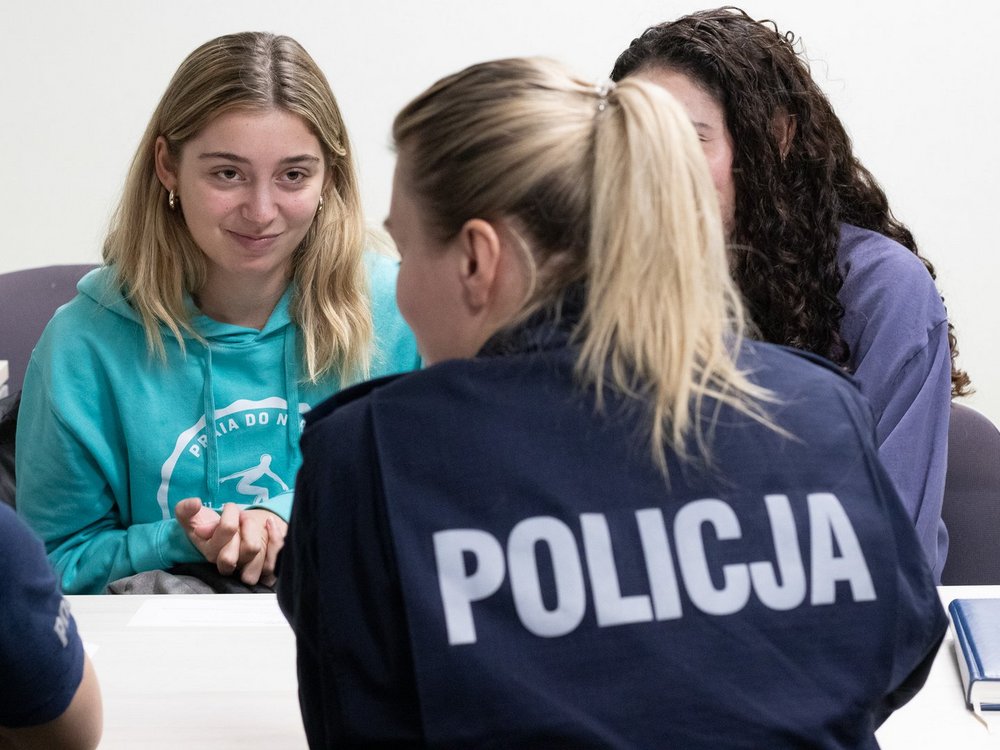
The idea for this form of language learning is a response to the communication situations that uniformed officers face daily during interventions in Lodz.
Police officers from Lodz increasingly encounter international citizens in the course of their duties. Such incidents underline the need to know a foreign language, most often English, as we know it's spoken almost everywhere in the world. Therefore, it's crucial for us to improve our language skills, precisely to communicate effectively with a variety of individuals in our daily work
– explains aspirant Jadwiga Czyż from the Prevention Department of the Municipal Police Headquarters in Lodz.
Communication in crisis situations
How have police officers managed communication with foreign citizens so far?
A lot depended on the situation the officers found themselves in. Some interventions were more difficult than others, so communication also varied. Basic communication was easy to achieve, but minor problems arose when more professional language was required
– adds aspirant Czyż.
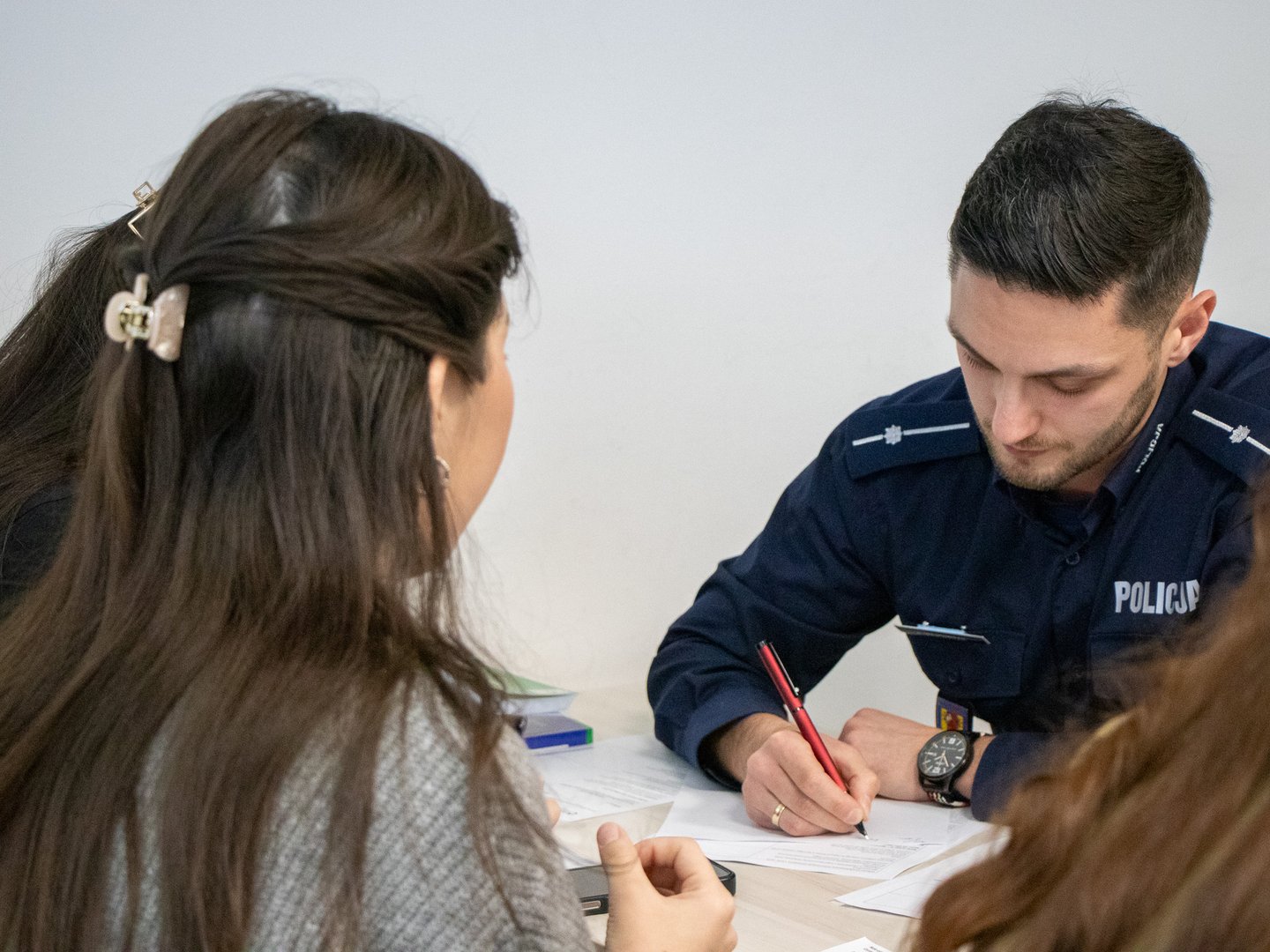
International participants of the conversations also spoke about communication difficulties and related concerns.
There were times during my stay in Poland when I used three different languages at once: Bulgarian, English and Russian, and sometimes even basic Polish. It was an unusual mix of languages, just to make sure my interlocutor could understand me as best as possible. I have never had trouble communicating with police officers, but I'm concerned that if, for example, I were admitted to a hospital, I wouldn't be able to communicate with the staff in English or explain my specific ailments. Overall, however, I'm pleasantly surprised by the number of Poles who speak English
– underlines Kalia Lyubomirova, a student from Bulgaria.
From theory to practice
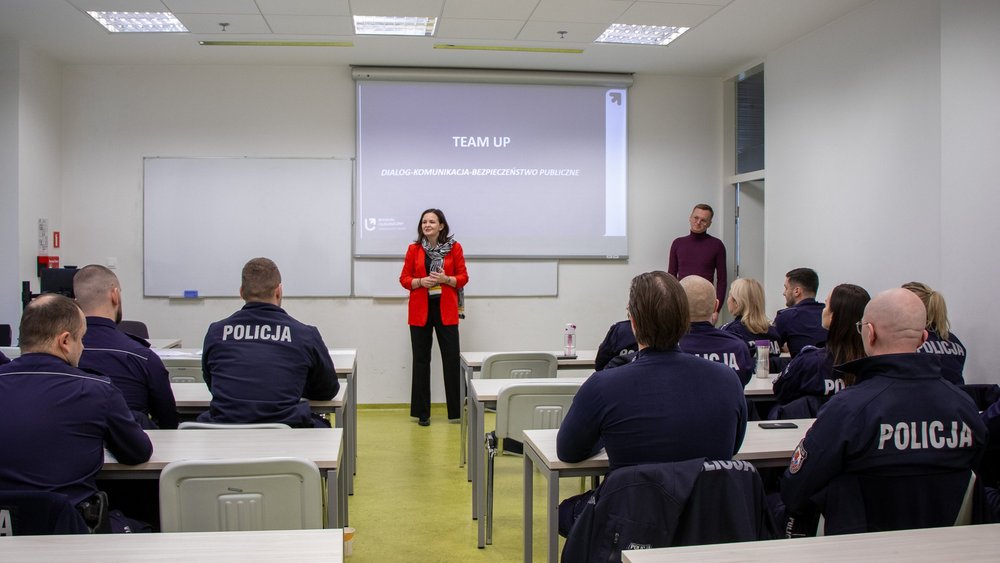
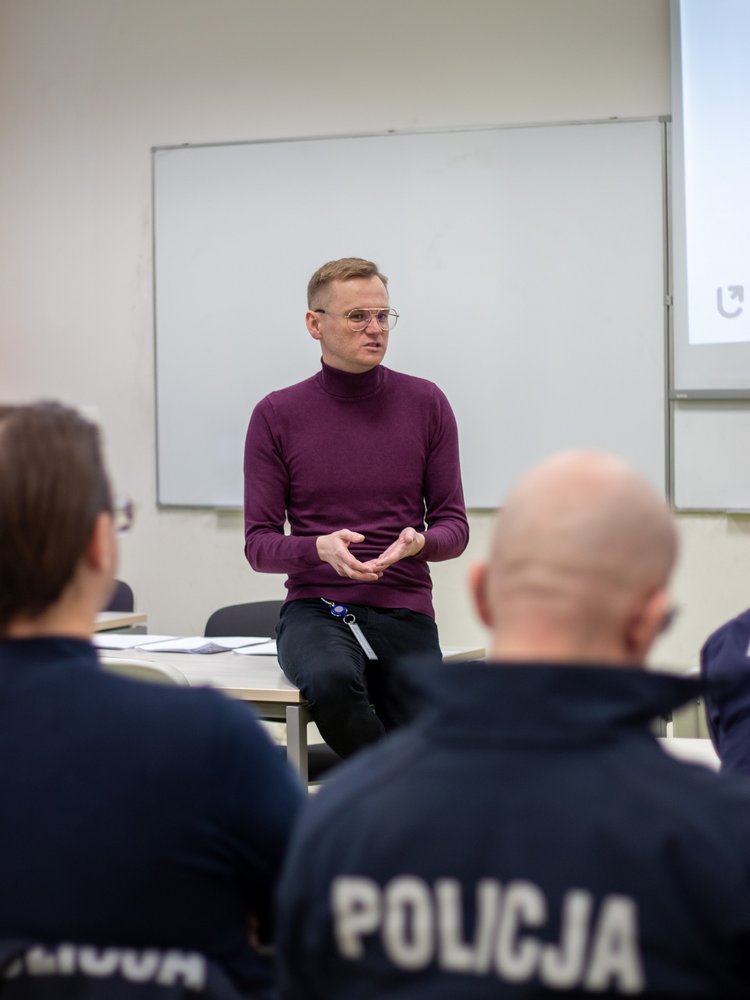
Before the police officers put their skills to the test, they listened to valuable advice from educators at the Faculty of Philology, University of Lodz. Dr Mateusz Gaze, an expert in glottodidactics with many years of experience, discussed his perspective on learning Polish as a foreign language. He also discussed the differences in teaching Polish to native speakers and foreign citizens who are encountering Polish for the first time.
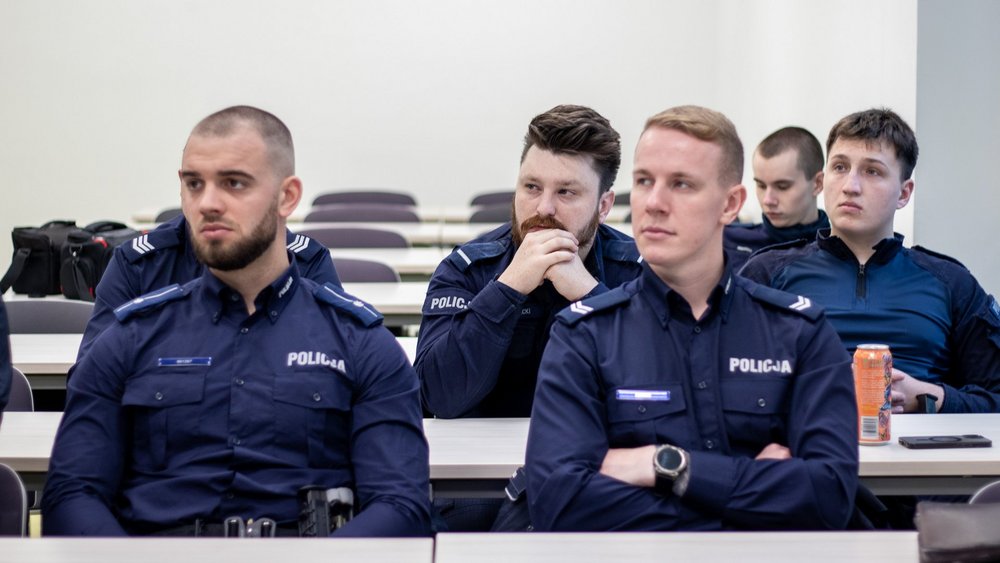
The police officers first participated in specialised workshops on simple communication with foreign citizens who speak limited Polish. The training aimed to prepare officers to conduct interventions in situations where language barriers hinder communication more effectively and safely.
The class covered the most common situations police officers encounter in their daily work: traffic stops, ID checks, reporting offenses and crimes, providing assistance and responding to crisis situations. The participants practiced using short, clear messages, free from jargon and difficult phrases, so that those with limited Polish could quickly understand commands and information
– underlined Dr Mateusz Gaze.
Particular emphasis was placed on the safety of interventions and how to clearly convey key messages in stressful situations: warnings, commands, information about rights and further steps. The police officers participated in simulations, allowing them to practice practical skills and see how simplified communication impacts the dynamics of an incident.
We have been researching the Polish language of foreign citizens at the Faculty of Philology for years. We understand its specificity and, at the same time, its communication limitations. The growing presence of foreign citizens in Poland makes knowledge of simple, effective operational Polish an essential element of officers' work. These workshops are designed to help officers build understanding more quickly and reduce the risk of misunderstandings that can lead to escalation
– adds Dr Gaze.
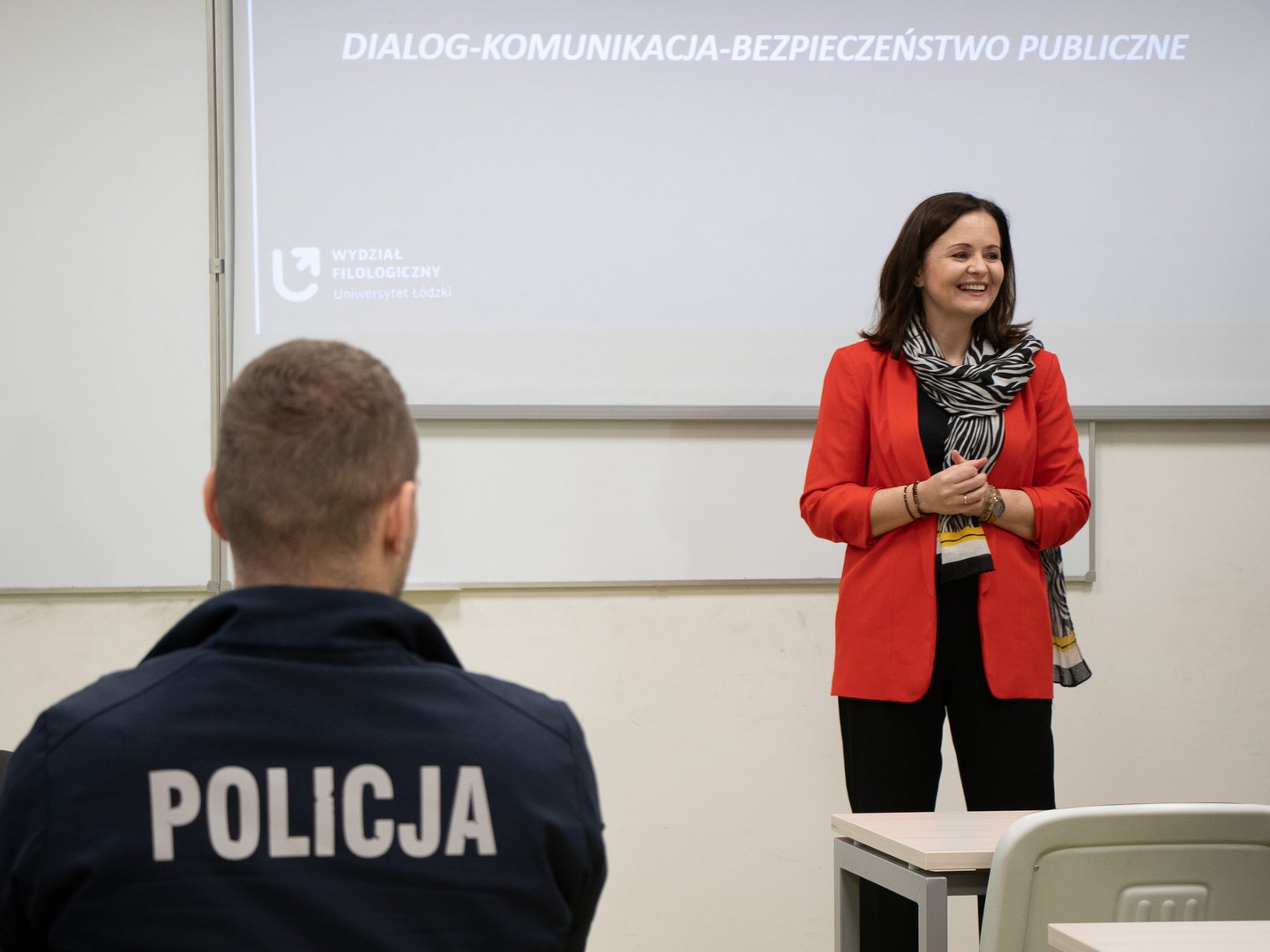
Dr Monika Tosik, the project coordinator, focused on both intercultural competences and communication in English. She discussed why foreign citizens are more likely to cooperate with the police when they feel that the officer "meets" them: simplifying the language, speaking more slowly, allowing them to express themselves, and explaining procedures and the reasons for their actions. Referring to the latest research on police-immigrant communication, she emphasised that adapting the language level and pace is an effective strategy for building trust, which increases foreign citizens' willingness to cooperate.
In situations of high arousal, such as fear or anger, the ability to process information deteriorates. People hear less than we think. Therefore, instead of one long monologue with a series of instructions, short messages, pauses, repetitions and ensuring the other person understands us are more effective
– said Dr Tosik.
Communication styles and cultural differences in the context of non-verbal communication were an important element of the training.
A foreign citizen who avoids conversation, lowers their gaze or reacts nervously isn't necessarily "hostile" – they're often simply scared, have had bad experiences with the police in their home country, or fear the consequences of their residency status. Therefore, conscious management of eye contact, voice, physical distance and gestures is crucial
– explained the project coordinator.
As she emphasised, "even with minimal knowledge of English, simple strategies such as a short introduction, a clear definition of the goal, signalling the next steps, supported by the conscious use of facial expressions, tone and gestures, can determine whether a foreign citizen perceives a police officer as a threat or an ally, and thus the willingness to cooperate, the quality of the information obtained and the overall effectiveness of the intervention."
They have found common ground
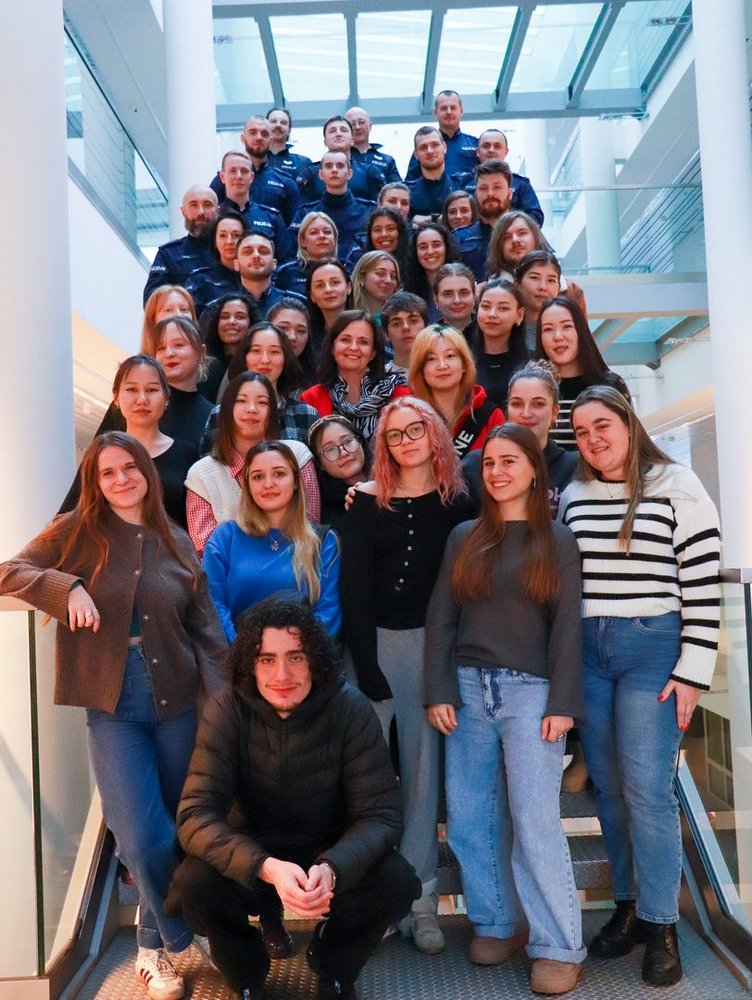
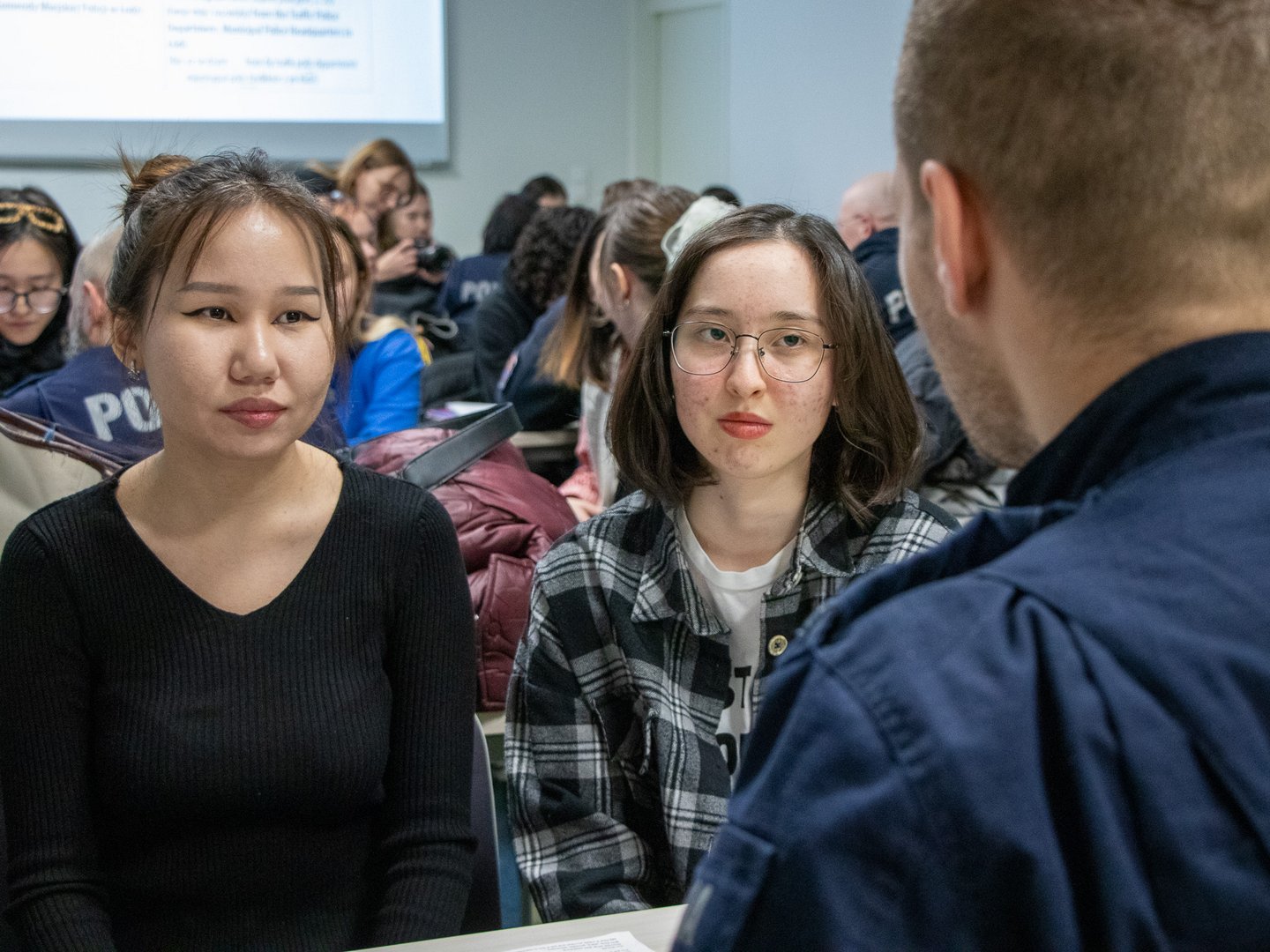
Finally, it was time for practical exercises. The international students arrived, bringing with them a set of role-plays: from routine roadside checks and ID checks in public spaces, to receiving reports of assault, theft or hate speech. The dialogue took place in English, exactly as it might have played out on the street, in a police car or at a police station.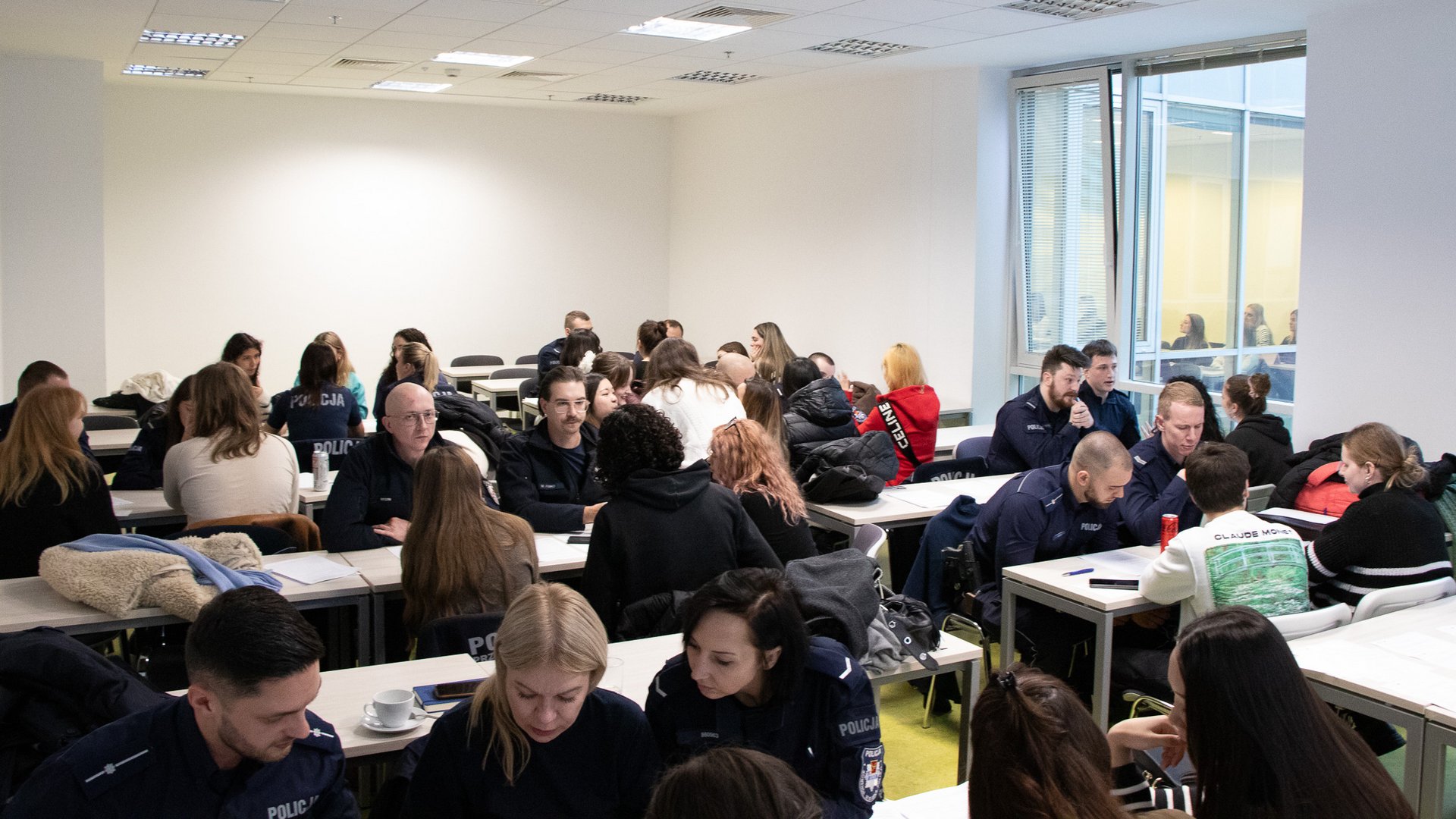
After the role-play exercise, the exercises evolved into a conversation, and the room became a space for an authentic intercultural encounter. The police officers were able to ask students about the cultural context of their behaviour, what contact with the police is like in their home countries and what gestures, reactions, and forms of expression might have different meanings than in Poland. Students, in turn, asked about Polish law and regulations, as well as work in uniformed services.
The conversation participants were enthusiastic about the project's activities. The officers underlined that they had high hopes for the classes offered at the faculty.
We hope that such classes will show us a path that will help us communicate even better with people from other countries who know English to varying degrees of fluency, just like us
– noted Junior Officer Paweł Olejniczak from the Patrol and Intelligence Department, a service dog handler.
International students who took part in the class also spoke positively about the opportunity to converse with police officers.
I'm really curious about this project. I've never had the opportunity to participate in similar initiatives before, neither in Belarus, where I'm from, nor in Lithuania, where I study. A police officer speaking English to me? Wow!
– Elizaveta Malodkina, another international student taking part in the unusual lesson, did not hide her excitement.
It's not over yet
This is just the first in a series of workshops. Further workshops will be held in December, with students from Ukraine also participating, so officers can practice simple communication in Polish. Activities within the TEAM UP project involve close cooperation between the Lodz Municipal Police Headquarters and the Faculty of Philology, University of Lodz, in numerous areas, including security training for the academic community. This will benefit both parties.
Text: Promotion and Communication Office, Faculty of Philology, University of Lodz
Photos: Bartosz Burski and Angelina Kusowska


